A dramatic road accident involving the 2026 Tata Punch Facelift has taken social media by storm, after a shocking truck collision video surfaced online. While accidents are unfortunate, this real-world incident has unexpectedly turned into a strong talking point for car safety, build quality, and crash protection. The footage clearly shows the compact SUV absorbing a severe impact, reigniting discussions around Tata Motors’ safety-first approach and why Indian buyers are increasingly prioritizing 5-star safety-oriented vehicles over flashy features.
As the Tata Punch Facelift 2026 prepares for its official launch, this accident has unintentionally provided a live demonstration of how modern engineering, reinforced body structures, and advanced safety technologies can make a difference when it matters the most.
What Happened in the Tata Punch Facelift Crash?
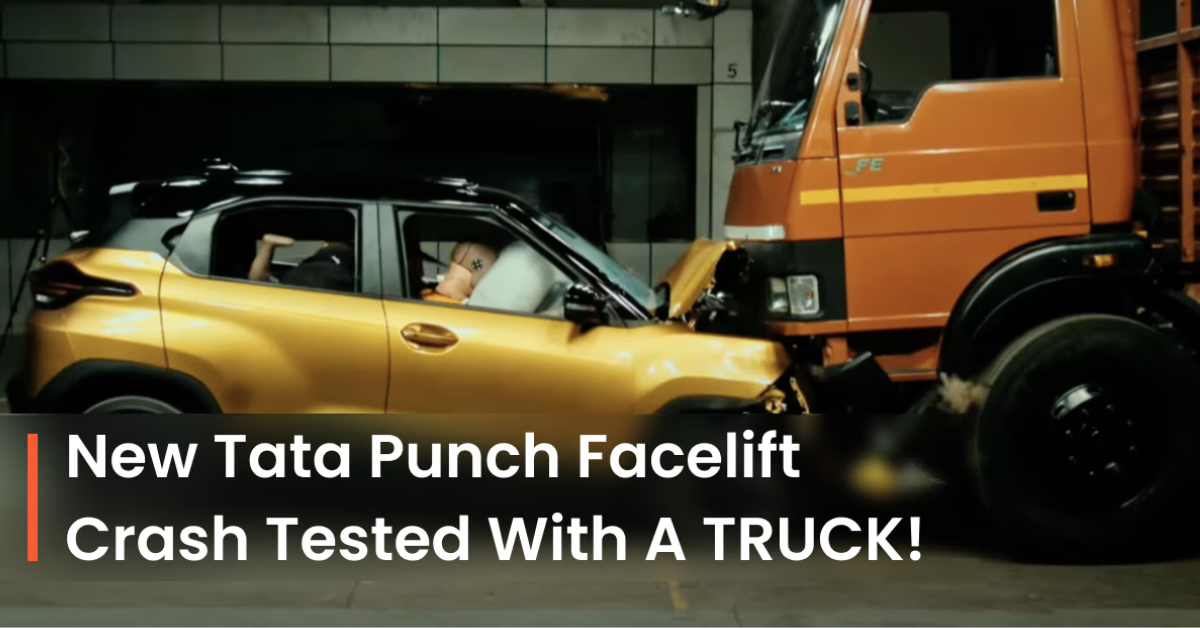
According to the viral footage, the new Tata Punch Facelift was involved in a high-impact collision with a heavy truck. The accident reportedly occurred on a highway, where the truck collided head-on or at a sharp angle with the Punch. Despite the massive size difference between the two vehicles, the Punch managed to retain its structural integrity, preventing a complete cabin collapse.
The front section of the car suffered visible damage, as expected in such an impact, but what caught everyone’s attention was the relatively intact passenger cabin. Doors appeared operable post-crash, and there were no signs of catastrophic deformation, a critical factor when assessing real-world vehicle safety.
Why This Crash Matters for Indian Car Buyers
In India, where road conditions and traffic unpredictability are everyday challenges, vehicle safety has become a high-CPM, high-intent search topic. Buyers are no longer satisfied with just mileage or touchscreen size. Incidents like this reinforce why cars with strong crash structures, high tensile steel frames, and modern safety systems are gaining popularity.
The Tata Punch has already built a reputation as one of the safest compact SUVs in its segment, and the facelifted 2026 model appears to carry that legacy forward. This accident serves as a reminder that real-world crashes often matter more than lab tests.
Build Quality: Tata Motors’ Biggest Strength
One of the standout takeaways from the crash footage is the robust build quality of the 2026 Tata Punch Facelift. Tata Motors is known for using high-strength steel, reinforced crumple zones, and a rigid safety cell designed to absorb impact energy while keeping occupants safe.
In this incident, the front crumple zone did exactly what it was designed to do—absorb the brunt of the collision. By sacrificing exterior components like the bumper, bonnet, and fenders, the car minimized the force transferred to the cabin.
This kind of engineering is especially important in collisions involving large commercial vehicles, which are common on Indian highways.
Expected Safety Features in Tata Punch Facelift 2026
The facelifted version of the Punch is expected to come equipped with enhanced safety features, making it one of the most value-packed cars in the affordable SUV category. Key expected highlights include:
- Dual front airbags as standard
- ABS with EBD
- Electronic Stability Control (ESC)
- Traction control system
- Rear parking sensors and camera
- ISOFIX child seat mounts
- Seatbelt reminder system for all occupants
Such features significantly improve passenger safety, accident prevention, and insurance value, making the Punch an attractive choice for families and first-time buyers.
Viral Crash Video Boosts Brand Trust
While no automaker wants its vehicle involved in an accident, the reality is that how a car performs during a crash defines its credibility. The viral video has indirectly boosted Tata Motors’ brand image, reinforcing trust among safety-conscious consumers.
Many users online praised the Punch for protecting occupants despite the severity of the collision, calling it a “real-life safety test.” This kind of organic exposure is priceless and often more convincing than marketing campaigns.
Tata Punch Facelift 2026: More Than Just a Design Update
Beyond safety, the 2026 Tata Punch Facelift is expected to receive several updates, including:
- Sharper exterior styling
- Updated LED lighting elements
- Refreshed interior with a larger touchscreen
- Improved infotainment and connectivity features
- Better refinement and ride comfort
However, the core DNA of the Punch remains unchanged—a compact SUV designed for Indian roads with maximum safety and durability.
Why Compact SUVs Need Strong Safety Standards
Compact SUVs like the Punch are often used in urban traffic, highways, and rural roads, exposing them to a wide range of driving conditions. Accidents involving trucks, buses, and tractors are unfortunately common, making crash protection a non-negotiable feature.
The recent crash highlights why buyers should look beyond fuel efficiency and focus on passive and active safety systems, especially when transporting families.
Public Reaction and Market Impact
Following the circulation of the crash footage, interest in the Tata Punch Facelift 2026 has surged online. Search trends related to “Tata Punch safety,” “Tata Punch crash test,” and “safest small SUV in India” have seen a noticeable spike.
This incident could positively influence sales, resale value, and insurance confidence, as safety-proven vehicles often command higher trust in the market.
Final Thoughts
The 2026 Tata Punch Facelift truck crash is a sobering reminder of how unpredictable the roads can be. Yet, it also stands as a powerful example of why choosing a well-built, safety-focused car can be life-saving.
While the accident itself is unfortunate, the outcome reinforces Tata Motors’ commitment to building safer cars for Indian consumers. For buyers considering a compact SUV that prioritizes structural strength, advanced safety, and long-term reliability, the Tata Punch Facelift 2026 continues to make a compelling case.