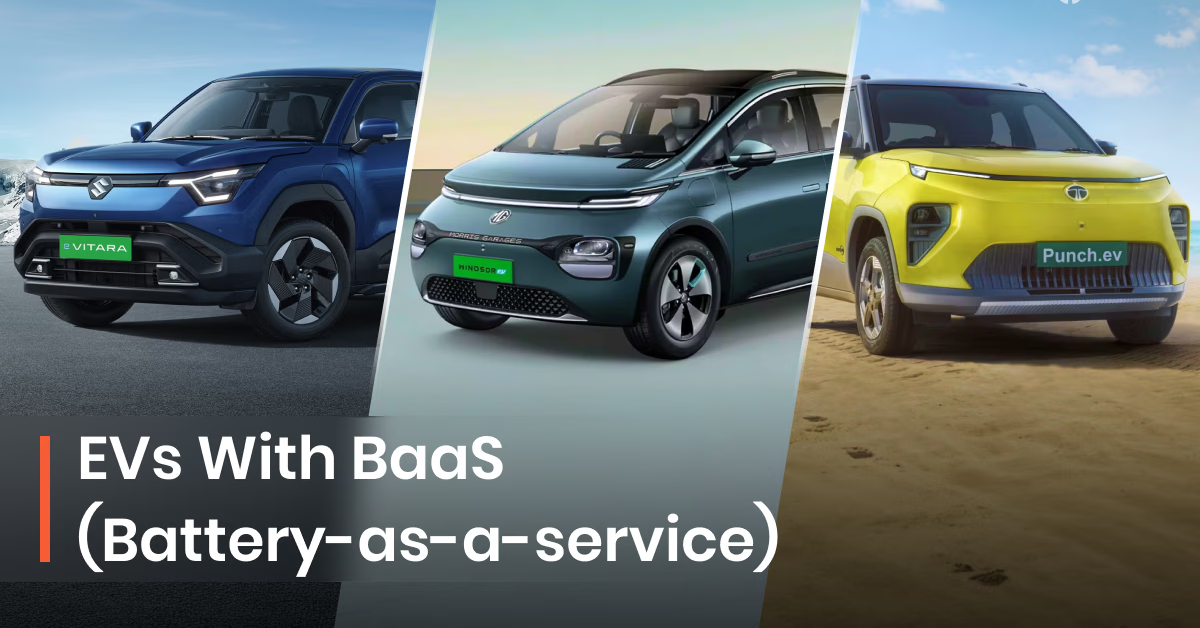
India’s electric vehicle market is evolving rapidly, and one of the most disruptive pricing innovations is Battery-as-a-Service (BaaS). This model significantly reduces the upfront cost of electric cars by separating the battery price from the vehicle cost.
Currently, MG Motor India dominates the BaaS EV segment, while Tata Motors and Maruti Suzuki are steadily entering the space with new electric models.
Let’s explore how BaaS works, which EVs offer it, and why this pricing strategy could reshape India’s electric mobility future.
What is Battery-as-a-Service (BaaS)?
Battery-as-a-Service allows customers to purchase an electric vehicle without paying for the battery upfront. Instead of buying the battery, you pay:
- A monthly subscription fee
- Or a per-kilometer usage charge
This dramatically lowers the ex-showroom price of the EV, making it more accessible to middle-class buyers.
Why Is BaaS Important?
The battery accounts for nearly 35–40% of an EV’s total cost. By separating it, manufacturers can advertise lower base prices — attracting more first-time EV buyers.
MG Motor: The Leader in BaaS EV Pricing
Among all automakers, MG Motor India has aggressively adopted the BaaS model.
Popular MG EVs with BaaS Option:
- MG Comet EV
- MG ZS EV
- MG Windsor EV
MG’s strategy focuses on affordability and flexible ownership.
Why MG Dominates:
- Strong partnerships with financial institutions
- Flexible battery subscription plans
- Transparent cost per kilometer model
- Urban-friendly EV portfolio
MG has successfully positioned itself as a pioneer in flexible EV financing.
Tata Motors: Gradually Entering the BaaS Segment
India’s EV market leader by sales volume, Tata Motors, is also exploring battery subscription options.
Tata EVs Potentially Offering BaaS:
- Tata Nexon EV
- Tata Punch EV
- Tiago EV
While Tata initially focused on traditional full-purchase ownership, the increasing demand for flexible pricing has pushed the company to experiment with BaaS structures.
Tata’s strength lies in:
- Proven EV technology
- Wide charging network expansion
- Strong brand trust
- High resale value
If Tata aggressively adopts BaaS nationwide, it could further accelerate EV adoption.
Maruti Suzuki’s Entry Into BaaS Strategy
India’s largest carmaker, Maruti Suzuki, is preparing for its EV expansion.
The upcoming e Vitara is expected to explore innovative pricing models, including potential battery subscription options.
Maruti’s approach is cautious but strategic:
- Affordable EV positioning
- Focus on mass-market buyers
- Strong dealership network across Tier 2 and Tier 3 cities
If Maruti adopts BaaS aggressively, it could bring electric mobility to rural and semi-urban India.
Benefits of BaaS for Indian Buyers
1. Lower Upfront Cost
The biggest advantage is a significantly reduced purchase price. For example, an EV costing ₹15 lakh could drop by ₹3–4 lakh without the battery included.
2. Reduced Financial Burden
Instead of paying a lump sum, buyers pay manageable monthly fees.
3. Battery Warranty & Maintenance
Most BaaS plans include:
- Extended battery warranty
- Performance assurance
- Replacement options if battery health declines
4. Faster EV Adoption
Lower pricing encourages more consumers to switch from petrol/diesel vehicles.
Potential Drawbacks of BaaS
While BaaS has advantages, buyers should consider:
- Long-term subscription cost may exceed outright purchase
- Kilometer usage restrictions
- Contract terms and conditions
- Dependency on financial partners
For high-mileage users, full ownership may still be more economical in the long run.
Cost Comparison: Traditional vs BaaS Model
| Feature | Traditional EV Purchase | BaaS EV Model |
|---|---|---|
| Upfront Cost | High | Lower |
| Monthly Expense | Minimal | Subscription Fee |
| Battery Ownership | Customer | Service Provider |
| Maintenance Risk | Owner | Mostly Covered |
| Flexibility | Fixed | Flexible Plans |
Urban drivers who travel moderate distances often benefit more from BaaS pricing.
Who Should Consider BaaS?
BaaS is ideal for:
- First-time EV buyers
- Budget-conscious families
- Fleet operators
- Urban commuters
- Ride-sharing drivers
It reduces financial entry barriers and offers predictable monthly expenses.
How BaaS Impacts India’s EV Market
The Indian EV ecosystem is still developing. Concerns about battery degradation and resale value often discourage buyers.
BaaS solves these issues by:
- Removing battery ownership risk
- Ensuring long-term support
- Offering subscription flexibility
- Increasing buyer confidence
This model could accelerate EV penetration in India from single-digit percentages to double digits in coming years.
Future of BaaS in India
With fuel prices remaining volatile and government incentives promoting green mobility, BaaS is expected to expand rapidly.
More automakers may adopt this strategy, including:
- Premium EV brands
- Fleet-focused manufacturers
- Startup EV companies
As competition increases, subscription pricing could become even more competitive, benefiting consumers.
Final Verdict: MG Leads, But Competition Is Heating Up
Currently, MG Motor India clearly dominates the Battery-as-a-Service EV segment in India with multiple models and flexible plans.
However, Tata Motors and Maruti Suzuki are quickly catching up, and their entry into BaaS pricing could make electric vehicles more affordable than ever before.
As the Indian automobile industry transitions toward electrification, BaaS could become a game-changing strategy — making EV ownership accessible, flexible, and financially practical for millions of buyers.
If you’re planning to switch to electric in 2026, exploring EVs with BaaS pricing might be the smartest financial move you make.