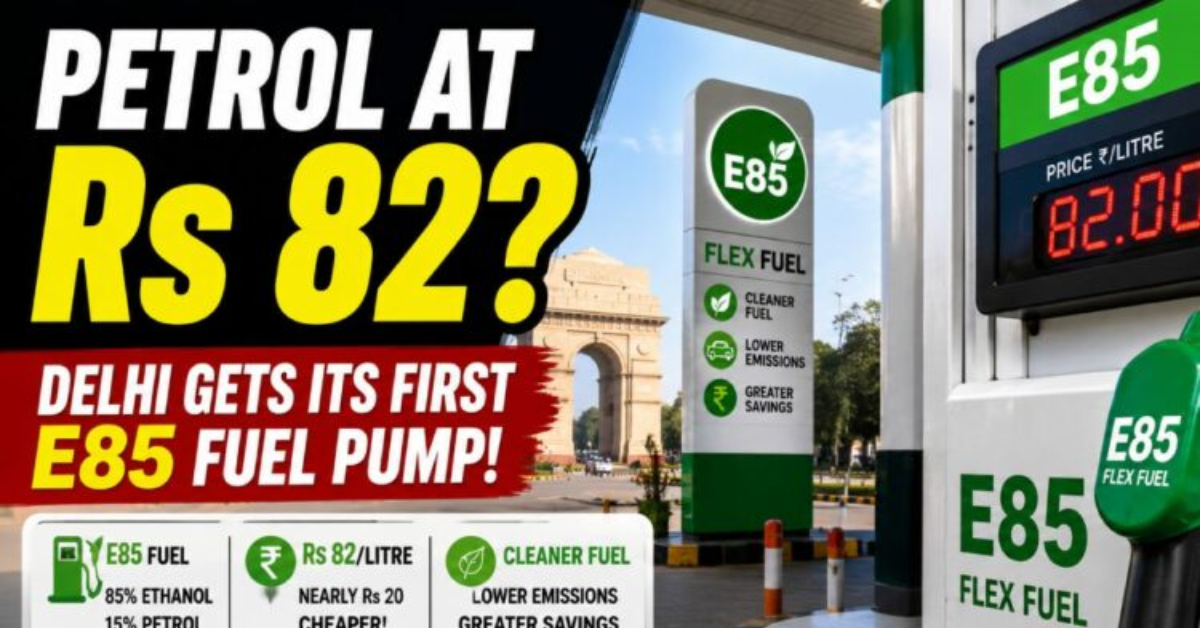
India’s automotive sector is entering a new era as the country welcomes its first E85 fuel station. With fuel prices remaining a major concern for millions of vehicle owners, the introduction of E85 fuel at approximately ₹82 per litre has generated significant excitement among consumers and industry experts alike.
The launch marks an important milestone in India’s journey toward alternative fuels and sustainable transportation. As the nation continues to explore cleaner and more affordable energy solutions, E85 fuel could emerge as a game-changing option for drivers looking to reduce fuel expenses while contributing to a greener environment.
In this article, we will explore what E85 fuel is, how it works, its benefits, challenges, impact on the automotive industry, and why the arrival of India’s first E85 fuel station is such a significant development.
What Is E85 Fuel?
E85 is a blend of fuel that contains approximately 85% ethanol and 15% petrol. Ethanol is a renewable biofuel primarily produced from agricultural products such as sugarcane, corn, and other biomass sources.
Unlike conventional petrol, which is derived entirely from fossil fuels, E85 incorporates a substantial amount of renewable energy. This makes it a cleaner-burning fuel option and reduces dependence on imported crude oil.
E85 fuel is designed for use in specially engineered Flex-Fuel Vehicles (FFVs), which can operate on various combinations of petrol and ethanol without requiring major modifications.
Why Is E85 Fuel Important for India?
India imports a significant portion of its crude oil requirements, making fuel prices vulnerable to global market fluctuations. Every increase in international oil prices directly impacts transportation costs and household budgets.
The introduction of E85 fuel offers several advantages:
- Reduced dependence on imported crude oil
- Better utilization of domestic agricultural resources
- Lower carbon emissions
- Potential fuel cost savings
- Enhanced energy security
- Support for farmers and rural economies
As India continues to promote ethanol blending programs, E85 fuel represents a natural progression toward greater energy independence.
Understanding Flex-Fuel Vehicles
One of the most important aspects of E85 fuel is vehicle compatibility. E85 cannot be used in all conventional petrol vehicles without proper engineering adjustments.
Flex-Fuel Vehicles are specifically designed to handle different ethanol-petrol blends. These vehicles feature:
Advanced Engine Management Systems
Modern FFVs use sophisticated sensors that automatically detect the fuel mixture and adjust engine parameters accordingly.
Corrosion-Resistant Components
Ethanol behaves differently than petrol and can affect certain fuel system materials. FFVs use specialized components that withstand higher ethanol concentrations.
Optimized Fuel Delivery Systems
The fuel injection system is calibrated to ensure efficient combustion regardless of the ethanol percentage.
As more automakers focus on alternative fuel technologies, Flex-Fuel Vehicles are expected to become increasingly common in the Indian market.
The Biggest Attraction: Affordable Fuel Pricing
The primary reason behind the growing interest in E85 fuel is its affordability.
At around ₹82 per litre, E85 has the potential to offer considerable savings compared to conventional petrol in many regions. For daily commuters, commercial vehicle operators, and fleet owners, even modest savings per litre can accumulate into substantial annual cost reductions.
Consider a vehicle owner who travels long distances every day. Lower fuel prices could result in:
- Reduced monthly fuel expenditure
- Lower transportation costs
- Improved household savings
- Better operational efficiency for businesses
This economic advantage is expected to be one of the strongest drivers of E85 adoption.
Environmental Benefits of E85 Fuel
Climate change and air pollution have become major concerns worldwide. Governments and industries are actively searching for cleaner alternatives to traditional fossil fuels.
E85 fuel offers several environmental advantages:
Reduced Greenhouse Gas Emissions
Since ethanol is derived from renewable plant sources, it can help lower overall carbon emissions throughout its lifecycle.
Cleaner Combustion
Ethanol burns cleaner than conventional petrol, resulting in reduced harmful emissions.
Renewable Energy Source
Unlike finite fossil fuels, ethanol can be continuously produced from agricultural crops and biomass.
Support for Sustainable Mobility
The adoption of E85 aligns with broader goals related to sustainable transportation and environmental conservation.
As environmental regulations become stricter, cleaner fuels like E85 may play a critical role in shaping the future of mobility.
Benefits for Indian Farmers
The expansion of ethanol production can create new opportunities for India’s agricultural sector.
Ethanol manufacturing relies heavily on crops such as sugarcane and other biomass feedstocks. Increased demand for ethanol may result in:
Higher Agricultural Demand
Farmers could benefit from additional markets for their produce.
Better Rural Income
The growth of biofuel industries can generate new revenue streams for agricultural communities.
Job Creation
Ethanol production facilities, logistics networks, and associated industries can create employment opportunities across rural areas.
This connection between agriculture and energy production makes E85 fuel particularly relevant for India’s economic development.
Challenges Facing E85 Adoption
While E85 presents numerous advantages, several challenges must be addressed for widespread adoption.
Limited Fuel Infrastructure
Currently, E85 fueling stations remain extremely limited. A nationwide network will be necessary to support large-scale usage.
Vehicle Compatibility
Most vehicles currently on Indian roads are not designed specifically for E85 fuel.
Consumer Awareness
Many drivers are unfamiliar with ethanol-based fuels and their benefits.
Supply Chain Development
A reliable ethanol production and distribution network must be established to ensure consistent fuel availability.
Addressing these challenges will require collaboration between government agencies, fuel providers, vehicle manufacturers, and agricultural stakeholders.
Impact on the Indian Automotive Industry
The arrival of E85 fuel could significantly influence future vehicle development strategies.
Automakers may increasingly invest in:
- Flex-Fuel Vehicle technology
- Alternative fuel engines
- Advanced fuel management systems
- Sustainable mobility solutions
Manufacturers that adapt quickly to changing fuel trends may gain a competitive advantage in the evolving market.
At the same time, consumers will benefit from greater vehicle choices tailored to alternative fuel options.
How E85 Fits Into India’s Green Mobility Strategy
India has adopted multiple approaches to reduce emissions and improve energy security. These include:
Electric Vehicles
Electric mobility continues to receive substantial policy support.
Hybrid Vehicles
Hybrid technology provides improved fuel efficiency while reducing emissions.
Biofuels
Ethanol and other biofuels offer practical solutions that can be integrated into existing transportation systems.
Hydrogen Technologies
Research into hydrogen-powered mobility is also gaining momentum.
E85 fuel complements these initiatives by offering a relatively accessible and scalable alternative fuel option.
What Can Consumers Expect in the Future?
The launch of India’s first E85 fuel station is likely just the beginning.
In the coming years, consumers may witness:
- More E85 fuel stations across major cities
- Increased availability of Flex-Fuel Vehicles
- Competitive fuel pricing
- Improved awareness regarding ethanol-based fuels
- Greater government support for alternative energy solutions
As infrastructure expands and vehicle options increase, E85 could become a mainstream choice for many Indian motorists.
Conclusion
The arrival of India’s first E85 fuel station represents a significant milestone in the country’s transportation and energy journey. With a price point of around ₹82 per litre, E85 fuel has captured attention as a potentially affordable, cleaner, and more sustainable alternative to conventional petrol.
Beyond fuel savings, E85 offers environmental benefits, supports domestic agriculture, reduces reliance on imported oil, and aligns with India’s broader vision for sustainable mobility. While challenges such as infrastructure development and vehicle compatibility remain, the long-term potential of E85 fuel is substantial.
As India continues to embrace innovation in transportation and energy, E85 fuel may play a pivotal role in reshaping how millions of people travel in the years ahead. The road toward cleaner and more affordable mobility has begun, and E85 could become one of the key fuels powering that transformation.