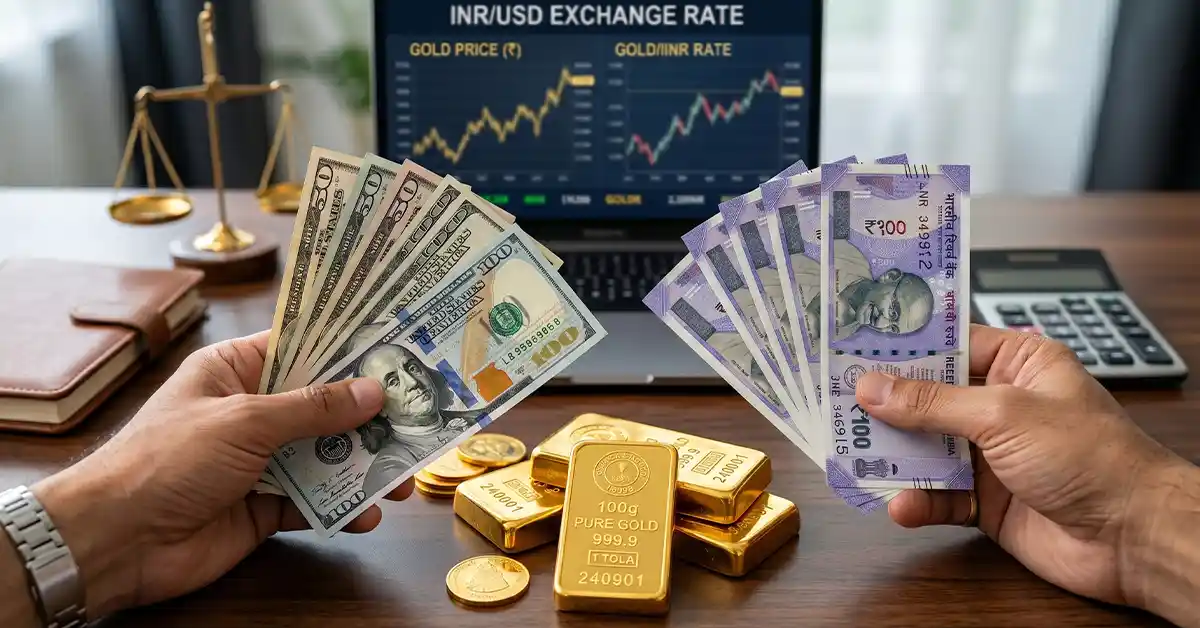
Gold has always held a special place in India’s economy, culture, and investment landscape. Whether purchased for weddings, festivals, wealth preservation, or portfolio diversification, gold remains one of the most trusted assets among Indian households and investors.
However, many people are surprised to learn that gold prices in India are not determined solely by local demand and supply. One of the most important factors influencing domestic gold prices is the Rupee-Dollar exchange rate. Even when international gold prices remain stable, fluctuations in the value of the Indian Rupee against the US Dollar can significantly impact the price of gold in the country.
Understanding this relationship is essential for investors, traders, and anyone planning to buy gold. In this article, we will explore how the Rupee-Dollar exchange rate affects gold prices in India and why monitoring currency movements can help make smarter investment decisions.
Why the Rupee-Dollar Exchange Rate Matters
Gold is traded globally in US Dollars. International gold prices are generally quoted in dollars per ounce, making the US Dollar the benchmark currency for gold transactions worldwide.
India imports a substantial amount of its gold requirements from international markets. Since these purchases are settled in US Dollars, any change in the exchange rate between the Rupee and the Dollar directly influences the cost of importing gold.
This means that even if global gold prices remain unchanged, Indian consumers may experience higher or lower gold prices depending on currency movements.
Understanding the Basic Relationship
The relationship between the Rupee-Dollar exchange rate and gold prices can be explained through a simple principle:
When the Rupee Weakens
A weaker Rupee means more Indian currency is required to purchase one US Dollar.
As a result:
- Gold imports become more expensive.
- Import costs rise.
- Domestic gold prices increase.
- Consumers pay more for gold.
When the Rupee Strengthens
A stronger Rupee means fewer Rupees are required to purchase one US Dollar.
As a result:
- Gold imports become cheaper.
- Import costs decline.
- Domestic gold prices may decrease.
- Buyers can purchase gold at relatively lower prices.
This direct relationship makes exchange rates one of the most important factors affecting India’s gold market.
How Gold Pricing Works in India
The price of gold in India is influenced by multiple components:
International Gold Prices
Global gold prices serve as the base price for imported gold.
Currency Exchange Rate
The Rupee-Dollar exchange rate determines how much Indian importers must pay for gold purchased internationally.
Import Duties and Taxes
Government duties and taxes contribute to the final retail price.
Transportation and Logistics Costs
Import-related expenses also affect pricing.
Local Demand and Supply
Seasonal demand during weddings and festivals can influence short-term price movements.
Among these factors, exchange rate fluctuations often create immediate and noticeable effects on domestic gold prices.
Why the US Dollar Influences Gold Markets
The US Dollar is considered the world’s primary reserve currency and dominates international trade.
Several factors contribute to its influence:
- Global commodities are priced in Dollars.
- International financial transactions often use Dollars.
- Central banks hold significant Dollar reserves.
- Investors view the Dollar as a safe-haven asset during uncertainty.
Because gold is traded globally in Dollars, any significant movement in the US currency affects gold pricing worldwide.
What Causes Rupee-Dollar Exchange Rate Fluctuations?
Understanding the drivers of currency movements helps explain changes in gold prices.
Inflation
Higher inflation can weaken a currency by reducing purchasing power.
If inflation rises faster in India than in major economies, the Rupee may come under pressure.
Interest Rate Changes
Interest rates influence capital flows.
Higher rates often attract foreign investments, strengthening a currency.
Lower rates can have the opposite effect.
Trade Deficits
India imports large quantities of crude oil, electronics, machinery, and gold.
When imports exceed exports, demand for foreign currency increases, which can weaken the Rupee.
Global Economic Conditions
Economic uncertainty often drives investors toward safe-haven assets such as the US Dollar and gold.
These shifts can impact both exchange rates and gold prices simultaneously.
Foreign Investment Flows
Large inflows of foreign investment typically support the Rupee.
Conversely, capital outflows can contribute to currency depreciation.
The Impact of a Weak Rupee on Gold Prices
A weakening Rupee generally pushes gold prices higher in India.
Higher Import Costs
Gold importers must spend more Rupees to purchase the same amount of gold internationally.
These additional costs are passed on to consumers.
Increased Retail Prices
Jewelry buyers and investors face higher purchase prices even if international gold prices remain unchanged.
Investment Demand May Rise
Many investors view gold as a hedge against currency depreciation.
As the Rupee weakens, demand for gold often increases because investors seek protection from declining currency value.
Wealth Preservation
Gold tends to retain value during periods of currency weakness, making it attractive for long-term wealth preservation.
The Impact of a Strong Rupee on Gold Prices
When the Rupee strengthens against the Dollar, gold imports become cheaper.
Reduced Import Costs
Importers require fewer Rupees to purchase gold from international markets.
Potential Price Stability
Domestic gold prices may remain stable or even decline if international prices are unchanged.
Increased Consumer Purchasing Power
Buyers can acquire more gold for the same amount of money.
Higher Jewelry Demand
Lower prices often encourage consumer purchases during wedding and festive seasons.
Why Gold Sometimes Rises Even When the Rupee Strengthens
Many investors assume that a stronger Rupee will always lower gold prices. However, this is not always the case.
Several situations can cause gold prices to rise despite currency appreciation.
Global Gold Rally
If international gold prices increase sharply, domestic prices may still rise even if the Rupee strengthens.
Geopolitical Tensions
Global uncertainty often boosts demand for gold as a safe-haven asset.
Economic Slowdowns
Investors frequently move capital into gold during economic downturns.
Central Bank Purchases
Increased gold buying by central banks can support global prices.
In such situations, the impact of rising international gold prices may outweigh currency-related benefits.
Why Investors Monitor Both Gold and Currency Markets
Successful gold investors understand that domestic prices are influenced by two major factors:
- International gold prices
- Rupee-Dollar exchange rates
Ignoring either factor can lead to incomplete investment analysis.
For example:
- Global gold prices may remain stable.
- The Rupee may weaken significantly.
- Indian gold prices could still rise sharply.
Similarly:
- Global gold prices may increase.
- The Rupee may strengthen.
- Domestic gold gains may be smaller than expected.
Monitoring both indicators provides a clearer understanding of future price trends.
Gold as a Hedge Against Currency Risk
One reason gold remains popular in India is its ability to act as a hedge against currency depreciation.
When the Rupee weakens:
- Imported goods become more expensive.
- Inflationary pressures may increase.
- Purchasing power declines.
Gold often helps preserve wealth during such periods because its value tends to adjust alongside currency fluctuations.
For this reason, many investors include gold as part of a diversified financial portfolio.
Long-Term Trends in Gold and the Rupee
Historically, long-term Rupee depreciation has contributed to the upward trajectory of gold prices in India.
Over extended periods:
- Inflation increases costs.
- Currency values fluctuate.
- Global gold prices change.
- Economic cycles influence investor behavior.
These combined factors have helped support long-term appreciation in domestic gold prices.
While short-term volatility is common, many investors view gold as a strategic asset for long-term financial security.
Tips for Gold Buyers and Investors
Before investing in gold, consider the following:
Track Currency Movements
Understanding exchange rate trends can help identify favorable buying opportunities.
Monitor Global Gold Prices
International market movements significantly affect domestic prices.
Avoid Emotional Buying
Investment decisions should be based on financial goals rather than temporary market excitement.
Diversify Investments
Gold works best as part of a balanced investment strategy rather than a sole investment.
Think Long Term
Gold is often most effective as a wealth-preservation asset over longer time horizons.
Conclusion
The Rupee-Dollar exchange rate plays a critical role in determining gold prices in India. Since gold is imported and priced globally in US Dollars, fluctuations in the value of the Rupee directly affect import costs and retail prices. A weaker Rupee generally leads to higher gold prices, while a stronger Rupee can help keep prices under control.
However, currency movements are only one piece of the puzzle. International gold prices, inflation, global economic conditions, investor sentiment, and market demand also influence price trends. Understanding the interaction between these factors enables investors and consumers to make more informed decisions.
For anyone interested in gold investing, keeping a close eye on both currency markets and global gold trends can provide valuable insights and help maximize long-term financial opportunities.