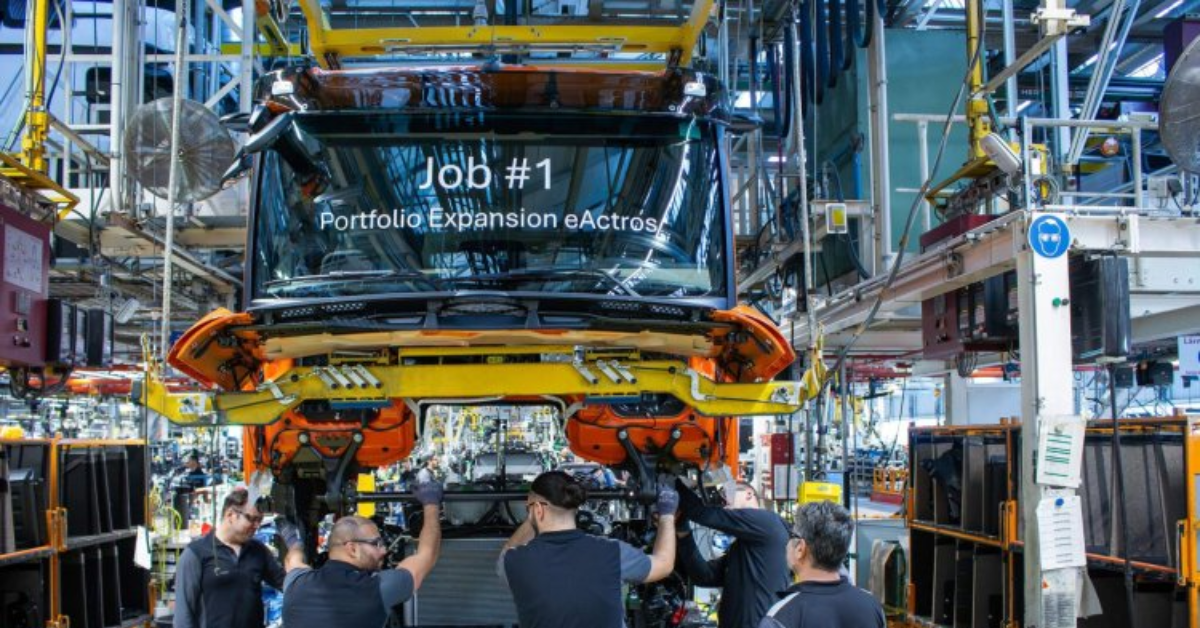
Mercedes-Benz has taken a decisive step toward reshaping the future of commercial transportation by officially starting series production of the second-generation eActros 400. As global logistics companies and fleet operators increasingly shift toward sustainable mobility, the launch of this advanced electric truck marks a major milestone in zero-emission heavy-duty transport. With improved efficiency, enhanced durability, and real-world usability, the new eActros 400 reflects Mercedes-Benz’s long-term commitment to decarbonizing road freight.
A New Chapter in Electric Truck Manufacturing
The second-generation eActros 400 is not just an update—it represents a comprehensive evolution based on extensive real-world testing and customer feedback. Mercedes-Benz has spent years refining its electric truck platform, gathering data from pilot fleets operating in diverse conditions. The result is a production-ready electric truck designed to meet the demanding needs of modern logistics, including urban distribution, regional transport, and sustainability-focused operations.
By commencing series production, Mercedes-Benz signals its confidence in electric trucks as a viable alternative to diesel-powered heavy vehicles. This move also aligns with tightening emission regulations across global markets and growing pressure on logistics companies to reduce their carbon footprint.
Powertrain and Battery Technology
At the heart of the eActros 400 lies an advanced electric drivetrain developed specifically for heavy-duty applications. The truck is powered by electric axle technology that delivers strong torque, smooth acceleration, and quiet operation—key advantages in both city and highway driving.
The “400” in its name refers to the vehicle’s approximate range, which is made possible by high-capacity lithium-ion battery packs. These batteries are engineered for durability and efficiency, supporting daily operations without compromising performance. Mercedes-Benz has focused heavily on thermal management and battery protection, ensuring consistent performance even under heavy loads or challenging weather conditions.
Fast-charging capability further enhances the truck’s usability, allowing operators to integrate charging cycles seamlessly into existing logistics schedules. This minimizes downtime and improves overall fleet productivity.
Built for Real-World Logistics
One of the most significant improvements in the second-generation eActros 400 is its readiness for real-world commercial use. Mercedes-Benz has optimized the truck’s payload capacity, ensuring that electrification does not come at the cost of operational efficiency. The vehicle is compatible with a wide range of body types, making it suitable for applications such as refrigerated transport, parcel delivery, and general cargo movement.
The low-noise operation of the electric drivetrain also opens up new possibilities for night-time and early-morning deliveries, especially in urban areas with strict noise regulations. This gives logistics companies greater flexibility while reducing disturbance to residential communities.
Driver-Focused Cabin and Safety Enhancements
Mercedes-Benz has long been known for prioritizing driver comfort and safety, and the eActros 400 continues this tradition. The cabin has been designed with a familiar layout to ease the transition for drivers moving from diesel trucks to electric models. Clear digital displays provide real-time information on battery status, range, energy consumption, and charging progress.
Advanced driver assistance systems are integrated to enhance safety and reduce fatigue during long hauls. These systems support drivers with features such as adaptive assistance, braking support, and improved visibility—key factors in preventing accidents and ensuring smooth operations.
By making the driving experience intuitive and comfortable, Mercedes-Benz aims to improve driver acceptance of electric trucks, which is crucial for widespread adoption.
Sustainability Beyond Zero Emissions
While the eActros 400 produces zero tailpipe emissions, Mercedes-Benz’s sustainability approach goes far beyond that. The company has emphasized responsible manufacturing processes, energy-efficient production facilities, and the use of recyclable materials wherever possible.
Starting series production of the second-generation model also demonstrates how electric mobility is moving from experimental phases to industrial-scale manufacturing. This shift is essential for reducing the overall environmental impact of the transportation sector, which remains one of the largest contributors to global emissions.
For fleet operators, adopting the eActros 400 is not just an environmental decision—it is also a strategic move that aligns with future regulations, corporate sustainability goals, and evolving customer expectations.
Economic Benefits for Fleet Operators
Although electric trucks traditionally come with higher upfront costs, the eActros 400 offers compelling long-term economic advantages. Lower energy costs compared to diesel, reduced maintenance requirements, and fewer moving parts contribute to lower total cost of ownership over time.
Electric drivetrains eliminate the need for complex components such as exhaust after-treatment systems and multi-speed transmissions, reducing wear and tear. Additionally, predictable energy costs make budgeting easier for fleet managers, especially as fuel prices continue to fluctuate globally.
As charging infrastructure expands and renewable energy becomes more accessible, the economic case for electric trucks like the eActros 400 is expected to grow even stronger.
A Strategic Move for the Future of Freight
The start of series production for the second-generation eActros 400 reflects Mercedes-Benz’s broader vision for the future of freight transport. The company is steadily building a comprehensive electric truck portfolio that addresses various weight classes and use cases.
This strategic move positions Mercedes-Benz as a leader in the electric commercial vehicle segment at a time when the industry is undergoing rapid transformation. Governments, businesses, and consumers alike are demanding cleaner transport solutions, and manufacturers that adapt quickly stand to benefit the most.
Conclusion
The second-generation Mercedes-Benz eActros 400 entering series production marks a turning point in heavy-duty electric mobility. With improved range, robust performance, driver-focused design, and a strong emphasis on sustainability, the eActros 400 is designed to meet the real-world demands of modern logistics.
As electric trucks transition from niche products to mainstream solutions, Mercedes-Benz’s latest milestone underscores the industry’s shift toward a cleaner, quieter, and more efficient future. The eActros 400 is not just an electric truck—it is a clear statement that the era of sustainable commercial transportation has truly arrived.