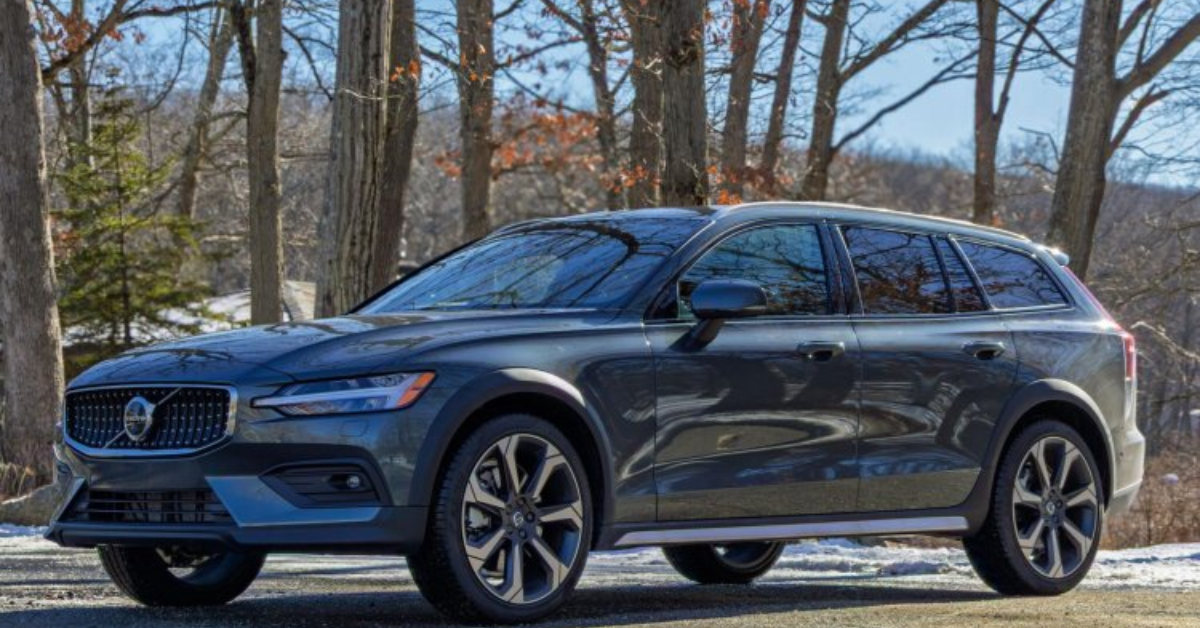
Volvo has officially confirmed that it will end sales of the V60 Cross Country in the United States by 2026, marking the conclusion of one of the brand’s most distinctive wagon offerings in the American market. The decision reflects broader shifts in consumer demand, evolving profitability strategies, and Volvo’s long-term focus on SUVs and electrification.
Once considered a niche yet practical alternative to crossovers, the V60 Cross Country carved out a loyal following among buyers seeking all-weather capability combined with Scandinavian design. However, changing market dynamics have made it increasingly difficult for wagons to survive in a U.S. automotive landscape dominated by SUVs and electric vehicles.
The End of an Era for Volvo Wagons in the U.S.
Volvo has long been associated with wagons, earning a reputation for safety, practicality, and understated luxury. The V60 Cross Country represented a modern evolution of that heritage, blending wagon versatility with raised ground clearance, all-wheel drive, and rugged styling.
Despite its strengths, the V60 Cross Country remained a low-volume product in the U.S. market. As American consumers increasingly gravitate toward compact and midsize SUVs, wagons—no matter how capable—have struggled to maintain sales momentum.
The 2026 discontinuation highlights how even well-regarded models are not immune to changing consumer preferences.
Why Volvo Is Ending V60 Cross Country Sales
Several key factors have contributed to Volvo’s decision:
1. Declining Demand for Wagons
The U.S. market has shifted decisively toward SUVs and crossovers. Buyers prefer higher seating positions, aggressive styling, and perceived versatility, all of which SUVs deliver more convincingly in the eyes of mainstream consumers.
2. Focus on Profitability and Scale
Automakers are increasingly prioritizing models that offer higher profit margins and scalable platforms. Low-volume vehicles like the V60 Cross Country often struggle to justify ongoing investment in certification, marketing, and compliance.
3. Strategic Shift Toward Electrification
Volvo has made clear its ambition to transition toward electrified and software-driven vehicles. Allocating resources to EV platforms and electric SUVs aligns better with both regulatory pressures and consumer demand.
What the V60 Cross Country Offered
The V60 Cross Country stood apart in the premium segment by delivering a unique blend of features:
- Elevated ride height compared to standard wagons
- Standard all-wheel drive for enhanced traction
- Refined cabin with premium materials
- Strong safety credentials and advanced driver assistance
- Balanced performance suited for both urban and highway use
For buyers seeking something different from conventional SUVs, the V60 Cross Country provided a compelling alternative. However, uniqueness alone was not enough to sustain long-term viability in the U.S.
SUV Dominance Reshaping Volvo’s Lineup
Volvo’s U.S. portfolio has increasingly centered on SUVs such as the XC40, XC60, and XC90, which consistently outperform wagons in sales. These models align perfectly with current market trends and offer greater flexibility for hybrid and electric powertrains.
By discontinuing the V60 Cross Country, Volvo can streamline its lineup and concentrate on vehicles that deliver higher demand, stronger brand visibility, and better return on investment.
This shift mirrors a broader industry trend where automakers are rationalizing their product offerings to focus on high-performing segments.
Impact on U.S. Consumers
For American buyers, the exit of the V60 Cross Country reduces the already limited selection of premium wagons available in the market. Enthusiasts who appreciate wagons for their driving dynamics and cargo efficiency may feel underserved.
However, Volvo continues to offer multiple SUV alternatives that deliver similar practicality, modern technology, and superior ground clearance. While they may not replicate the exact driving feel of a wagon, they meet the expectations of the broader consumer base.
What This Means for Volvo’s Brand Identity
Volvo’s wagon heritage has played a major role in shaping its global identity. The gradual withdrawal of wagons from the U.S. market signals a pragmatic approach rather than a rejection of that legacy.
Globally, Volvo may continue offering wagons in regions where demand remains strong. In the U.S., however, the brand is adapting to local preferences while reinforcing its image as a premium, safety-focused, and forward-looking automaker.
This market-specific strategy allows Volvo to remain competitive without compromising its long-term goals.
Electrification and Future Product Direction
The decision to end V60 Cross Country sales aligns with Volvo’s broader transition toward electrified mobility. Electric SUVs and crossovers provide better packaging flexibility for batteries and advanced technology, making them more suitable for future development.
Volvo’s future U.S. lineup is expected to emphasize:
- Electric and plug-in hybrid SUVs
- Software-defined vehicle platforms
- Advanced safety and driver-assistance systems
- Sustainable materials and manufacturing practices
By reallocating resources away from low-volume models, Volvo can accelerate innovation in high-growth segments.
Industry Perspective
From an industry standpoint, Volvo’s move is not surprising. Many manufacturers have already exited the wagon segment in the U.S., citing similar challenges. The decision underscores the reality that emotional appeal and heritage must often give way to commercial viability.
Automakers today must balance tradition with transformation, especially as regulatory pressures and consumer expectations continue to evolve.
Conclusion
Volvo’s decision to end V60 Cross Country sales in the U.S. by 2026 marks the close of a distinctive chapter in the brand’s American lineup. While the model earned respect for its versatility, safety, and refined design, shifting market dynamics ultimately made its continuation unsustainable.
As Volvo sharpens its focus on SUVs and electrification, the move reflects a strategic realignment designed to secure long-term growth and competitiveness. For enthusiasts, the V60 Cross Country will remain a reminder of Volvo’s wagon legacy—but for the brand, the future lies firmly in high-demand, technology-driven mobility solutions.