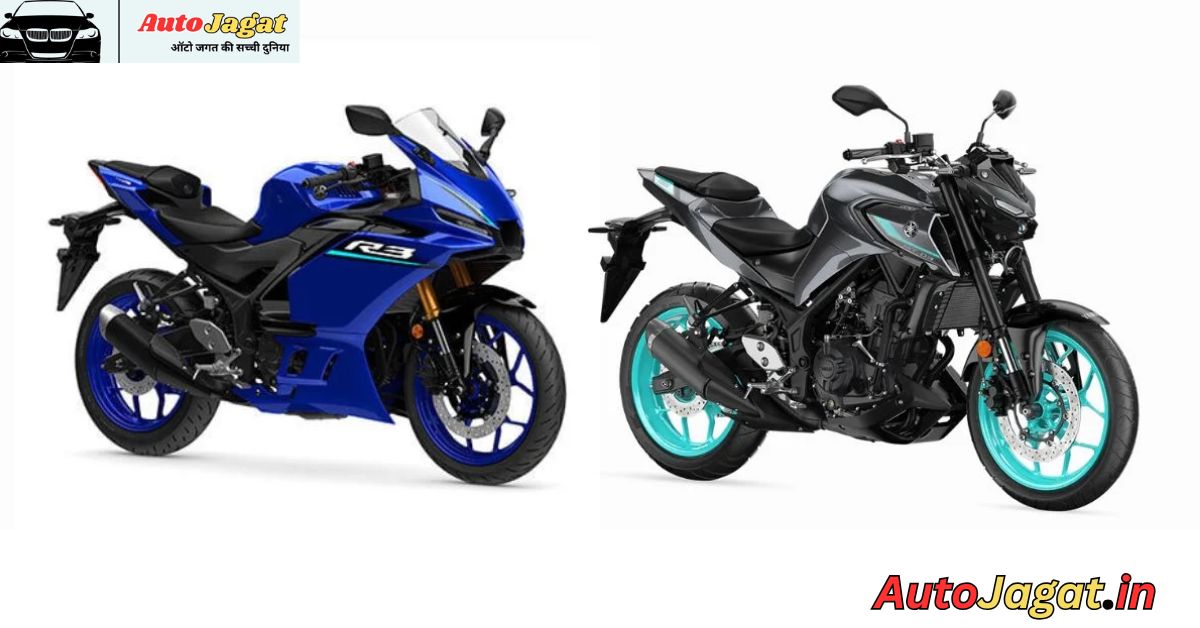
The Indian motorcycle market is dynamic, with shifting consumer preferences and evolving regulations constantly reshaping the landscape. In December 2025, Yamaha quietly discontinued two of its premium middleweight offerings—the YZF‑R3 and MT‑03—ending their limited run in India. Both models were imported as CBUs (Completely Built-Up units), which made them expensive compared to rivals, ultimately restricting their appeal.
Why Were the R3 and MT‑03 Discontinued?
Several factors contributed to Yamaha’s decision:
- High Pricing: The R3 was priced at ₹4.65 lakh and the MT‑03 at ₹4.60 lakh (ex-showroom). Even after discounts of ₹20,000, they remained costly compared to competitors.
- CBU Import Route: Importing as CBUs meant higher duties and taxes, pushing prices beyond what many enthusiasts were willing to pay.
- Low Demand: Despite their global popularity, sales volumes in India remained limited. Dealerships across the country confirmed that stocks had run out, and imports were halted.
- Market Fit: Indian buyers in the 300–400 cc segment often prefer more affordable options like KTM, Bajaj, or TVS, which offer strong performance at lower prices.
The Bikes in Brief
Both motorcycles shared the same platform and engine:
- Engine: 321 cc parallel-twin producing 41.4 bhp and 29.5 Nm.
- Transmission: 6-speed gearbox.
- Suspension: USD front forks and rear mono-shock.
- Braking: Disc brakes with dual-channel ABS.
The R3 was a fully-faired sports bike, while the MT‑03 was its naked sibling. Globally, these models are praised for their balance of performance and everyday usability, but in India, their premium positioning limited accessibility.
What’s Next for Yamaha?
Interestingly, Yamaha has filed a trademark for the YZF‑R2, sparking speculation about a new addition to the R-series lineup. While details remain scarce, this could signal Yamaha’s intent to introduce a more accessible performance motorcycle tailored to Indian buyers.
Additionally, Yamaha is focusing on electric two-wheelers and strengthening its smaller displacement lineup, which remains the backbone of its sales in India.
Market Implications
The discontinuation of the R3 and MT‑03 leaves a gap in Yamaha’s portfolio. Enthusiasts who wanted a premium Yamaha in the 300–400 cc segment now have fewer options. Competitors like KTM RC 390, Honda CBR500R, and Kawasaki Ninja 400 will likely benefit from this vacuum.
However, Yamaha’s move could be strategic: by withdrawing underperforming models, the company can redirect resources toward new launches that better align with Indian market realities.
Pros and Cons of the Exit
Pros:
- Eliminates low-demand models.
- Frees up resources for new launches.
- Avoids brand dilution from overpriced offerings.
Cons:
- Enthusiasts lose access to globally acclaimed bikes.
- Weakens Yamaha’s presence in the premium segment.
- Competitors gain an edge in the 300–400 cc category.
Final Thoughts
The discontinuation of the Yamaha R3 and MT‑03 in India marks the end of a short-lived chapter. While both bikes offered excellent engineering and performance, their high prices and limited availability kept them from achieving mainstream success.
For Yamaha, this is not a retreat but a recalibration. The YZF‑R2 trademark hints at a fresh strategy—possibly a more affordable, locally produced performance bike that could capture the imagination of Indian riders. Combined with Yamaha’s growing focus on electrification, the brand is clearly preparing for the next phase of its journey in India.

Hello, my name is Himanshu Kumar and I am an experienced Digital Marketer. I have been blogging for the last 4 years and I have special interest in SEO. Here I give you easy bikes and writes easy-to-understand reviews and news about the latest bikes, helping readers choose the best options.. My aim is to always provide you with accurate, new and useful information.