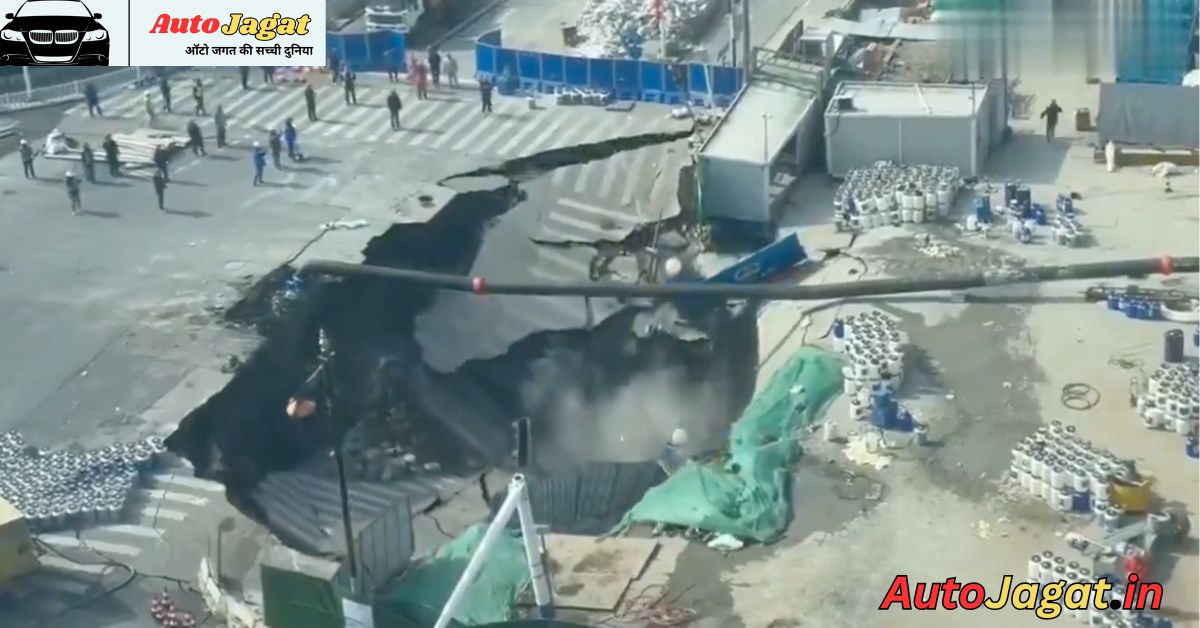
On February 11, 2026, Shanghai witnessed a dramatic incident when a massive sinkhole suddenly opened on Qixin Road at the Li’an Road junction in Minhang District, swallowing a large section of the road and damaging nearby structures. The collapse, captured on CCTV footage, showed cracks spreading across the tarmac before the ground gave way within seconds, leaving behind a deep crater. Fortunately, no casualties were reported, but the event has sparked serious concerns about urban safety and infrastructure resilience.
What Happened
- The sinkhole appeared near ongoing construction for the Jiamin Metro Line.
- A water leak detected a day earlier is believed to have weakened the soil beneath the road.
- Shanghai’s soft soil composition, combined with heavy construction activity, made the area vulnerable to subsidence.
- Within seconds, the road surface caved in, swallowing pavement, lampposts, and parts of sidewalks.
Immediate Response
Authorities acted swiftly:
- Emergency teams cordoned off the area and diverted traffic.
- Engineers began assessing the structural integrity of nearby buildings.
- A safety investigation was launched to determine the exact cause and prevent future incidents.
- Social media was flooded with viral videos of the collapse, sparking global attention.
Why Sinkholes Occur in Cities Like Shanghai
Sinkholes are not uncommon in rapidly urbanizing regions. Key contributing factors include:
- Geological conditions: Shanghai’s soil is naturally soft and prone to subsidence.
- Construction activity: Metro tunneling and excavation can destabilize underground layers.
- Water leaks: Excess water erodes soil, creating voids that eventually collapse.
- Urban pressure: Heavy traffic and infrastructure loads exacerbate weaknesses.
Broader Implications
This incident highlights pressing challenges for megacities:
- Urban safety: Ensuring roads and public spaces remain secure amid constant development.
- Infrastructure monitoring: Regular inspections and advanced geotechnical surveys are essential.
- Public awareness: Educating citizens about warning signs like cracks or unusual ground movement.
- Policy changes: Governments may need stricter regulations for construction near busy roads.
Lessons for Other Cities
Shanghai’s sinkhole serves as a cautionary tale for other rapidly growing urban centers:
- Proactive risk management can prevent disasters.
- Smart technology like ground sensors and AI-based monitoring could detect early warning signs.
- Collaboration between engineers, geologists, and city planners is vital to balance development with safety.
Conclusion
The Shanghai sinkhole of February 2026 is a stark reminder that urban growth must be matched with robust infrastructure safeguards. While no lives were lost, the incident underscores the fragility of modern cities under the weight of rapid expansion. For Shanghai, and indeed for cities worldwide, the challenge lies in building not just bigger and faster, but safer and smarter.

Hello, my name is Himanshu Kumar and I am an experienced Digital Marketer. I have been blogging for the last 4 years and I have special interest in SEO. Here I give you easy bikes and writes easy-to-understand reviews and news about the latest bikes, helping readers choose the best options.. My aim is to always provide you with accurate, new and useful information.