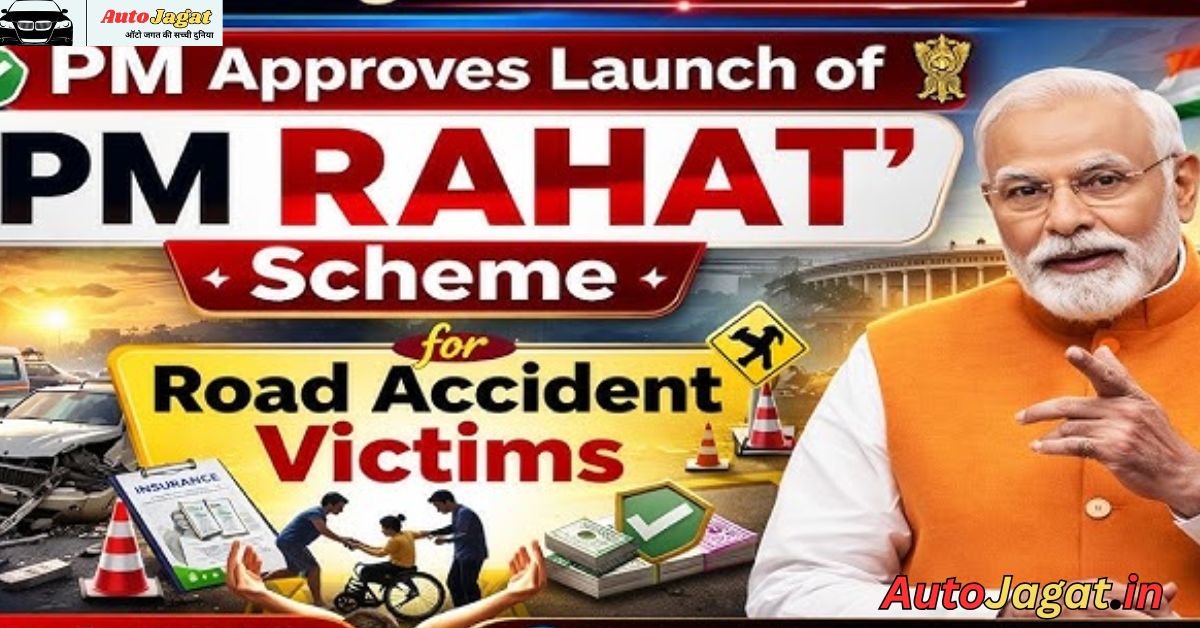
The Government of India has launched the PM RAHAT (Road Accident Victim Hospitalisation and Assured Treatment) scheme to ensure that road accident victims receive immediate, cashless medical care during the critical early hours after a crash. The initiative is designed to reduce preventable deaths by removing financial and logistical barriers to emergency treatment and by linking accident response to a national digital framework.
What the Scheme Provides
PM RAHAT offers cashless treatment up to ₹1.5 lakh for eligible road accident victims for a period of seven days from the date of the accident. The cover is intended to pay hospital charges directly so that victims receive timely care without worrying about upfront payments. For non‑life‑threatening injuries, the scheme provides stabilisation treatment for up to 24 hours; for life‑threatening cases, stabilisation can be extended up to 48 hours.
How It Works
The scheme integrates existing digital assets and emergency services to create a streamlined, process‑driven response:
- Emergency call linkage — The PM RAHAT process is tied to the national emergency helpline 112, enabling victims or good Samaritans to request immediate assistance and locate the nearest designated hospital.
- Digital transaction management — Hospital bills for covered treatment are routed through a centralised Transaction Management System so that eligible charges are settled cashlessly with the designated facility.
- Electronic accident reporting — The scheme uses an Electronic Detailed Accident Report to capture incident data and support claims and follow‑up processes.
These digital linkages are intended to reduce delays, improve traceability of care, and provide regulators with auditable evidence of treatment pathways.
Eligibility and Access
Who is covered — The scheme is aimed at road accident victims who require immediate medical attention. There is no separate pre‑registration required for victims to access the cashless benefit at designated hospitals. Good Samaritans who bring victims to care can also trigger the process by calling 112.
Where it applies — PM RAHAT is being rolled out through a network of designated hospitals across the country. The government has emphasised that the scheme will be available nationwide and that the list of participating hospitals will expand as implementation progresses.
Why PM RAHAT Matters
Saving the Golden Hour — The scheme targets the critical “Golden Hour” after an accident when timely medical intervention most strongly influences survival and long‑term outcomes. By removing the need for immediate payment and by guiding victims to the nearest capable facility, PM RAHAT aims to reduce preventable fatalities and severe disabilities.
Reducing out‑of‑pocket burden — Road accidents often impose sudden, heavy medical expenses on families. Cashless coverage up to ₹1.5 lakh for the initial seven days helps protect households from catastrophic health spending during the most urgent phase of care.
Strengthening emergency response — By tying the scheme to 112 and digital reporting systems, the government is creating a more coordinated emergency ecosystem that can be monitored and improved over time. This integration also supports faster referrals and better use of limited trauma‑care capacity.
Implementation Challenges and Considerations
While PM RAHAT is a significant step, effective outcomes will depend on operational details:
- Hospital readiness — Designated hospitals must be equipped and staffed to provide timely trauma care and to process cashless claims without administrative delays.
- Awareness and training — Citizens, first responders, and hospital staff need clear guidance on how to activate the scheme and document cases to ensure smooth claim settlement.
- Data validation — Continuous correlation between digital simulations, Electronic Detailed Accident Reports, and real‑world outcomes will be necessary to validate the scheme’s effectiveness and to refine eligibility and coverage rules.
Conclusion
The PM RAHAT scheme represents a pragmatic, digitally enabled approach to a persistent public‑health problem: deaths and disabilities from road accidents. By offering cashless emergency care up to ₹1.5 lakh, linking response to the 112 helpline, and using digital transaction and reporting systems, the government aims to ensure that financial constraints do not delay lifesaving treatment. Successful implementation will hinge on hospital participation, public awareness, and robust operational oversight, but the policy sets a clear direction toward faster, fairer emergency care for accident victims across India.

Hello, my name is Himanshu Kumar and I am an experienced Digital Marketer. I have been blogging for the last 4 years and I have special interest in SEO. Here I give you easy bikes and writes easy-to-understand reviews and news about the latest bikes, helping readers choose the best options.. My aim is to always provide you with accurate, new and useful information.