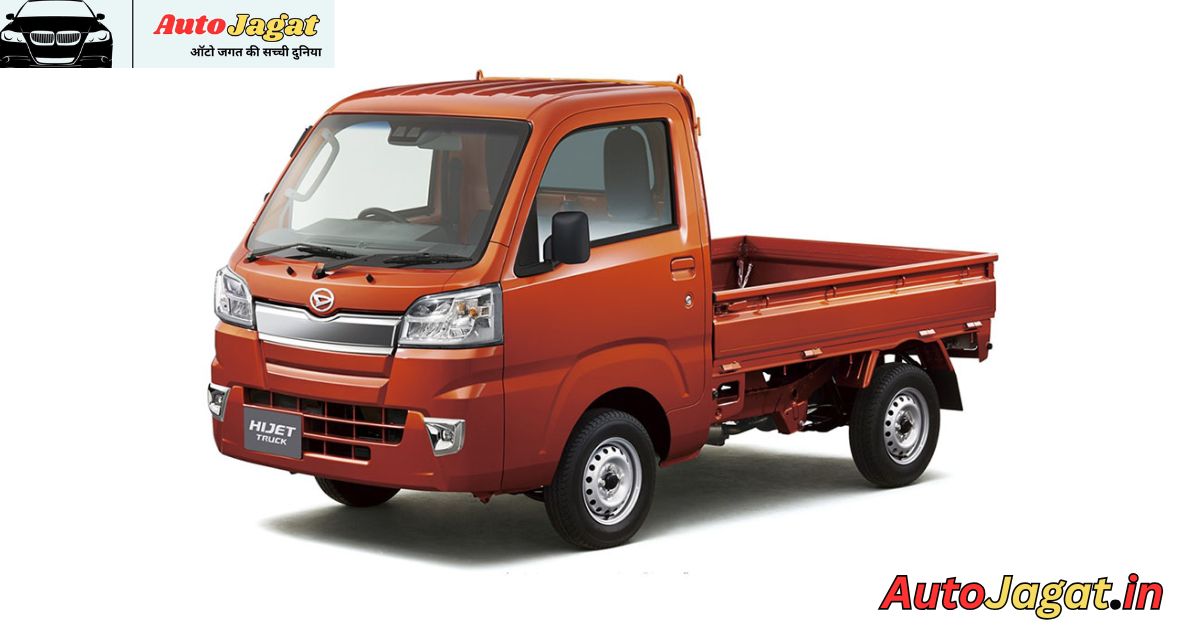
Japan’s Daihatsu Hijet trucks are compact, versatile, and highly reliable vehicles that have become popular worldwide for their efficiency, affordability, and adaptability in both urban and rural settings. They are especially valued in markets like India for small businesses, farms, and delivery services.
Origins and Legacy
- Introduced in 1960 by Daihatsu, the Hijet has been in continuous production for over six decades.
- It belongs to the “kei truck” category in Japan—lightweight, compact vehicles designed to meet strict size and engine regulations.
- Over the years, the Hijet has evolved from a simple utility truck into a versatile platform with multiple body styles, including pickup trucks, microvans, and cargo vans.
Key Features
- Compact Size: Perfect for navigating narrow streets and crowded urban areas.
- Fuel Efficiency: Kei-class engines (typically 660cc) deliver excellent mileage, making them cost-effective.
- Durability: Built for heavy use, especially in agriculture, construction, and small-scale logistics.
- Versatility: Available in 2WD and 4WD versions, with manual or automatic transmissions.
Why Businesses Love Hijet Trucks
- Affordability: Used models are widely available at competitive prices, often ranging from $2,000 to $8,000 USD depending on age and condition.
- Low Maintenance Costs: Simple mechanical design makes repairs easy and inexpensive.
- Cargo Flexibility: Flatbed versions are ideal for transporting goods, while van models suit delivery services.
- Rural Utility: Farmers appreciate their ability to handle rough terrain while remaining fuel-efficient.
Global Popularity
- In Japan, Hijet trucks are a staple for small businesses.
- Internationally, they are exported to countries like the US, UK, India, and Africa, where they serve as affordable alternatives to larger commercial vehicles.
- In India, their compact design and low running costs make them attractive for small-scale logistics, especially in crowded cities like Surat.
Risks and Considerations
- Import Regulations: Buyers outside Japan must check local rules on kei-class vehicles, as some countries restrict their use on highways.
- Parts Availability: While common in Japan, spare parts may be harder to source internationally.
- Payload Limits: Hijet trucks are not designed for heavy-duty hauling; they excel in light to medium loads.
Comparison Table: Hijet Truck Variants
| Variant | Engine Size | Drive Type | Best Use Case |
|---|---|---|---|
| Standard Pickup | 660cc | 2WD | Urban deliveries, small businesses |
| 4WD Pickup | 660cc | 4WD | Farming, rural terrain |
| Cargo Van | 660cc | 2WD/4WD | Courier services, city logistics |
| Microvan (Atrai) | 660cc | 2WD | Passenger transport, light cargo |
Conclusion
The Daihatsu Hijet truck is a proven workhorse that blends Japanese engineering, affordability, and practicality. For small businesses, farmers, and delivery operators, it offers a cost-effective solution that balances efficiency with reliability. While not suited for heavy-duty hauling, its compact design, fuel economy, and versatility make it a smart investment for anyone needing a dependable light commercial vehicle.

Hello, my name is Himanshu Kumar and I am an experienced Digital Marketer. I have been blogging for the last 4 years and I have special interest in SEO. Here I give you easy bikes and writes easy-to-understand reviews and news about the latest bikes, helping readers choose the best options.. My aim is to always provide you with accurate, new and useful information.