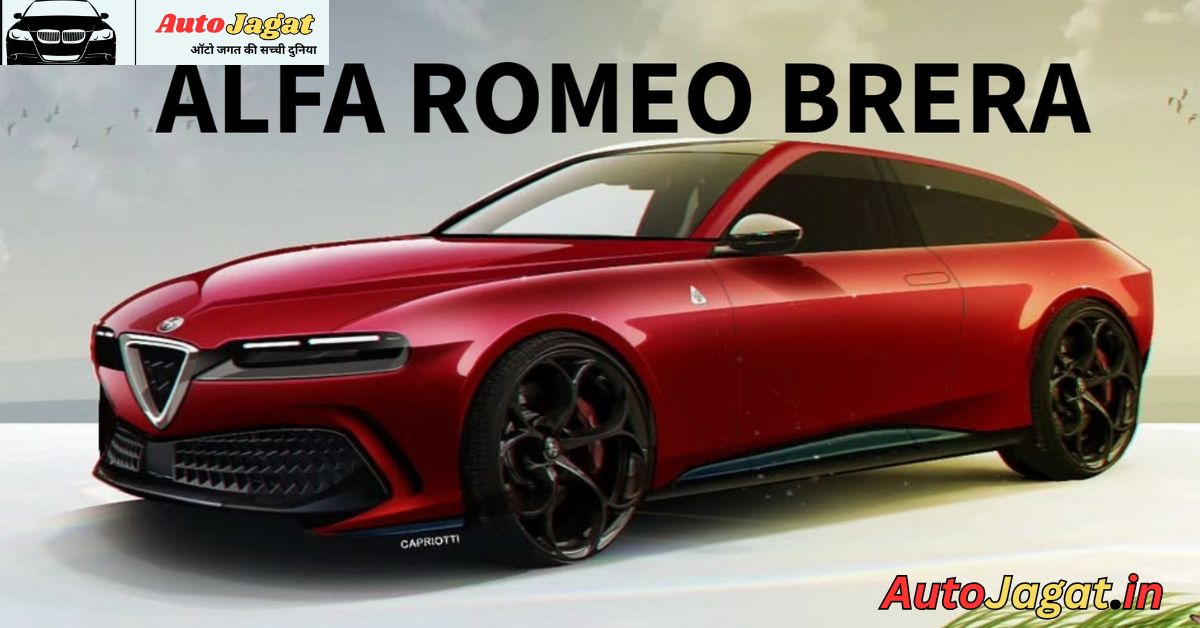
There are cars that you buy with your head—sensible, fuel-efficient hatchbacks with generous trunk space and a five-year warranty. Then, there are cars you buy with your heart. The Alfa Romeo Brera belongs firmly in the latter category. From the moment it debuted as a concept in 2002 to its current resurgence in automotive conversations as a “modern classic,” the Brera has remained one of the most polarizing and beautiful machines ever to wear the Biscione badge.
A Concept That Refused to Fade
To understand the Brera, you have to go back to the 2002 Geneva Motor Show. When Giorgetto Giugiaro of Italdesign unveiled the Brera concept, the automotive world collectively gasped. It was low, wide, and aggressive, featuring a long hood that flowed into a dramatic “shooting-brake” rear end. It looked like a sculpture carved from a single block of Italian passion.
Usually, concepts are watered down significantly before they reach production. But Alfa Romeo kept the soul of the concept alive. When the production model launched in 2005, it retained the iconic triple-headlight cluster, the plunging V-shaped grille, and those muscular rear haunches. It was, and still is, a masterclass in automotive styling.
The Driving Experience: Soul Over Seconds
Critiquing the Brera on performance alone is missing the point. Built on the GM/Fiat Premium platform (shared with the Alfa 159), it was often criticized for being heavier than its rivals, such as the Audi TT or the BMW Z4. This weight meant the Brera wasn’t a nimble “track day” scalpel; instead, it was a grand tourer—a car designed for sweeping Alpine passes and coastal drives.
The engine lineup offered a bit of everything:
- The 2.2 JTS: A smooth four-cylinder that served as the entry point.
- The 2.4 JTDm: A punchy five-cylinder diesel that offered surprising torque and a unique soundtrack for a derv.
- The 3.2 V6 Q4: The flagship. With all-wheel drive, it provided the grip and the growl that many felt the car deserved, even if it lacked the legendary “Busso” V6 of Alfas past.
For those who wanted more “bite,” the UK-exclusive Brera S, developed in collaboration with Prodrive, fixed many of the handling gripes. With stiffer Eibach springs, Bilstein dampers, and a lightened front end, the “S” proved that the Brera could dance if given the right shoes.
Interior: An Italian Lounge
Step inside, and the Brera wraps you in an environment that feels distinctly premium. The driver-focused cockpit, with its three central gauges angled toward you, evokes the classic Alfas of the 1960s. High-quality Frau leather and aluminum trim create a tactile experience that most modern, screen-heavy interiors can’t replicate.
Yes, the rear seats are better suited for a leather jacket than a human being, and the trunk opening is narrow, but when you look through the SkyView panoramic glass roof (available on higher trims) at the passing clouds, those practicalities seem trivial.
The Brera in 2026: A Legend Reborn?
As we look at the automotive landscape today, the Brera is enjoying a massive “renaissance.” In a world of increasingly homogenous SUV designs, the Brera’s silhouette stands out more than ever.
Interestingly, rumors and “fan-concept” leaks have recently flooded the internet regarding a 2026 Alfa Romeo Brera. While Alfa Romeo focuses on its transition to electrification with models like the Tonale and Junior, the spirit of the Brera—the idea of a breathtaking, no-compromise Italian coupe—is what fans are begging for. Whether it returns as a high-performance EV or a limited-run internal combustion masterpiece, the name “Brera” still carries immense weight.
Why It Still Matters
The Alfa Romeo Brera reminds us that cars can be more than just transportation. They can be art. It wasn’t the fastest car of its era, nor was it the most practical. But it possessed an “X-factor” that few cars can claim.
When you park a Brera, you don’t just walk away; you turn back to look at it. You admire the way the light catches the curves. You appreciate the audacity of a company that decided to build something beautiful simply because they could.
If you find a well-maintained Brera today, you’re not just buying a used car; you’re buying a piece of Italian design history. It is a reminder that while logic builds cars, passion builds Alfas.

Hello, my name is Himanshu Kumar and I am an experienced Digital Marketer. I have been blogging for the last 4 years and I have special interest in SEO. Here I give you easy bikes and writes easy-to-understand reviews and news about the latest bikes, helping readers choose the best options.. My aim is to always provide you with accurate, new and useful information.