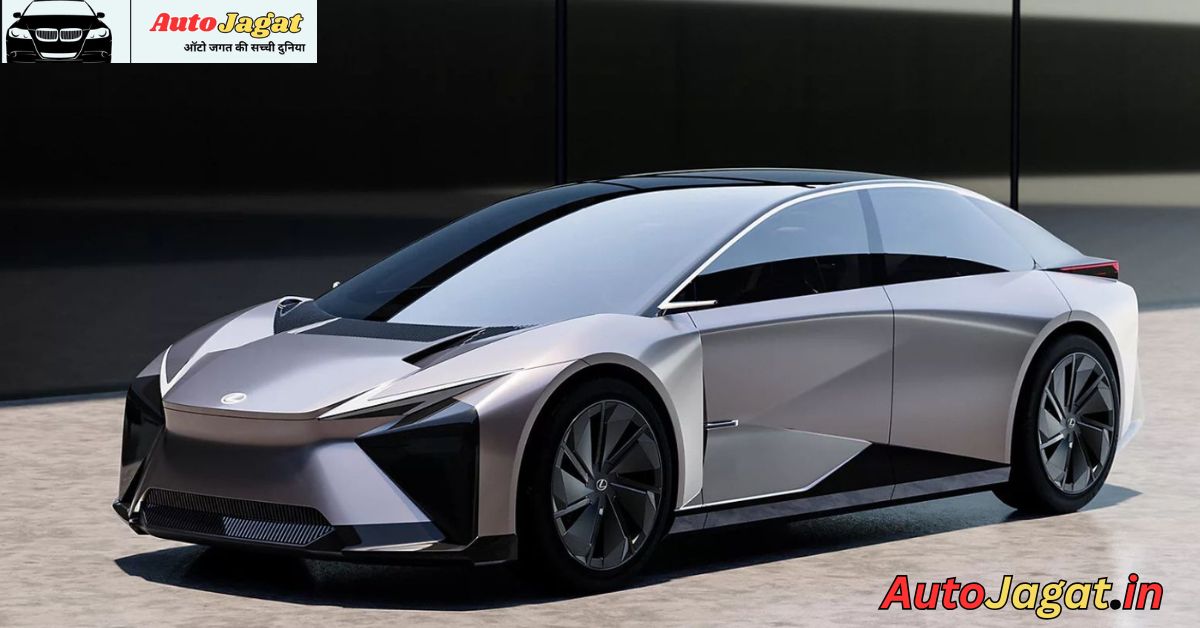
In the fast-moving world of electric vehicles, a week can feel like a lifetime. But the automotive industry just received a massive reality check from the world’s biggest carmaker.
Toyota has officially pulled the plug on the development of its next-generation luxury electric sedan, the Lexus LF-ZC.
First teased as a jaw-dropping concept at the 2023 Japan Mobility Show, the LF-ZC was supposed to be the chosen one—the flagship vehicle destined to spearhead Lexus’s transition into a pure electric powerhouse. Originally slated for a 2026 launch and later delayed to mid-2027, the low-slung luxury saloon has now been permanently sidelined.
So, what went wrong? Why did Toyota decide to halt a project that was supposed to define its electric future? Let’s break down the strategy shift, the market realities, and what this means for luxury car buyers.
The Cold Water of Market Realities
Toyota’s decision isn’t an isolated incident; it’s a symptom of a broader, global automotive recalibration. For the past few years, aggressive government mandates and optimistic sales projections led many automakers to pour billions into pure battery electric vehicle (BEV) platforms.
However, the market is pushing back. Automakers are facing a cocktail of challenges:
- The “EV Slump” Myth vs. Reality: While global EV sales are technically still growing, the rate of that growth has slowed down dramatically, especially in the premium sector.
- The Subsidy Disappearing Act: Shifting political landscapes—most notably in the United States—have thrown a wrench into corporate roadmaps. The elimination of key EV tax incentives and changing federal regulations have made expensive luxury EVs a much tougher sell.
- The SUV Takeover: Consumer taste remains undefeated. Buyers are simply walking past low-slung luxury sedans and opting for SUVs and high-riding crossovers.
Faced with these headwinds, Toyota’s Chief Executive Officer, Kenta Kon, has shifted the brand’s focus back toward profitability and actual consumer demand, scaling back the aggressive goal of selling 1.5 million EVs annually by 2026.
What We’re Missing Out On: The LF-ZC Technology Showcase
The cancellation of the production LF-ZC hurts because it wasn’t just going to be another electric car with a Lexus badge. It was a rolling laboratory for Toyota’s absolute best future tech.
Lexus promised that the sedan would utilize gigacasting—a manufacturing method popularized by Tesla that casts massive aluminum chassis pieces in a single section to cut weight and production costs. Furthermore, it was supposed to feature highly efficient, next-generation prismatic batteries aiming for an astonishing 1,000-kilometer (~620 miles) range, alongside an AI-powered “Arene OS” digital cockpit.
The Silver Lining: The Tech Isn’t Dead
If you were looking forward to a high-tech electric Lexus, don’t lose all hope just yet. Toyota has made it clear that while the LF-ZC sedan is dead, the millions of dollars spent researching its technology won’t go to waste.
A spokesperson confirmed that Toyota will continue heavy R&D into gigacasting and highly anticipated solid-state batteries. Instead of forcing these innovations into a sedan that the market might ignore, Toyota plans to repurpose these tech breakthroughs for high-demand body styles—namely, luxury SUVs and crossovers.
Toyota’s “I Told You So” Moment
For years, critics slammed Toyota for being “too slow” to embrace full electrification. While competitors went all-in on BEVs, Toyota stuck stubbornly to its multi-pathway strategy, continuing to invest heavily in traditional hybrids (HEVs), plug-in hybrids (PHEVs), and hydrogen tech alongside pure electrics.
As it turns out, that caution was remarkably prophetic. Today, as rivals like Ford, General Motors, and Mercedes-Benz scale back their aggressive EV timelines due to profitability struggles, Toyota’s hybrid-heavy portfolio is making it look like the smartest adult in the room. In fact, even with this cancellation, Toyota’s pragmatic approach yielded a 42% increase in global EV sales last year, largely driven by more practical, mass-market models like the bZ4X and regional vehicles in China.
Final Thoughts: A Smarter, Slower Electric Journey
The death of the Lexus LF-ZC tells us that the gold rush era of experimental EV sedans is drawing to a close. Automakers can no longer afford to build electric cars just to prove that they can; they have to build vehicles that people actually want to buy, and that make financial sense to produce.
Lexus will still give us an electric future—it’s just going to look a lot more like a premium, ultra-reliable SUV and less like a sci-fi saloon.

Hello, my name is Himanshu Kumar and I am an experienced Digital Marketer. I have been blogging for the last 4 years and I have special interest in SEO. Here I give you easy bikes and writes easy-to-understand reviews and news about the latest bikes, helping readers choose the best options.. My aim is to always provide you with accurate, new and useful information.