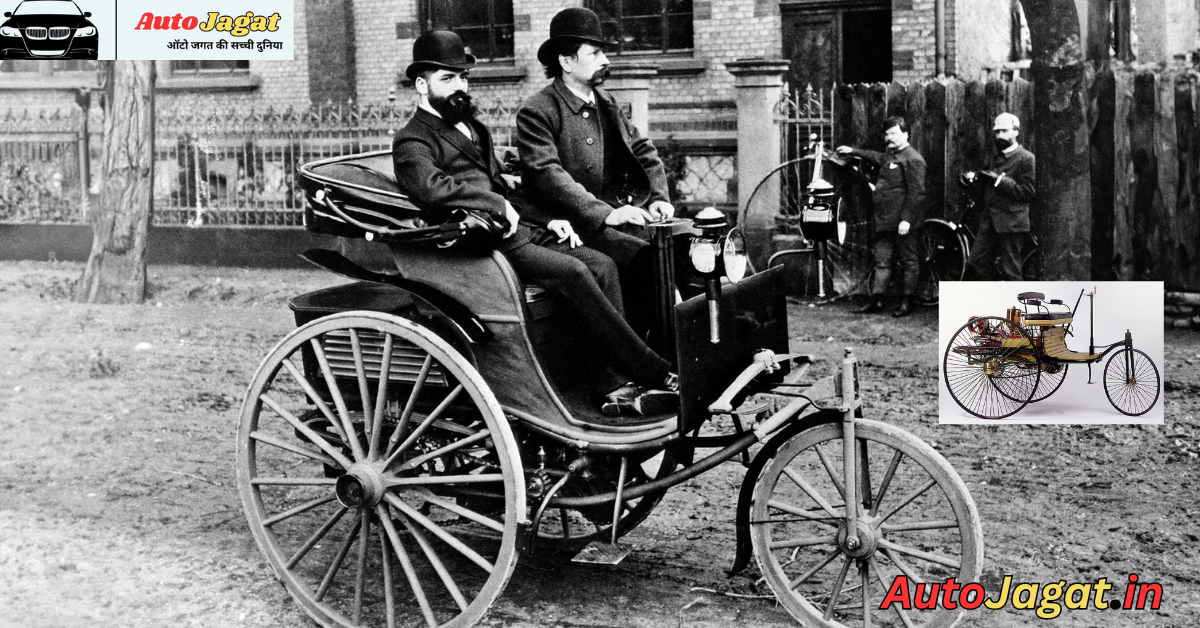
When we think of the automobile today, we picture sleek designs, powerful engines, and a world connected by roads and highways. Yet, the story of how it all began is rooted in one man’s vision and determination: Carl Benz. In 1886, Benz patented his three-wheeled Motorwagen, a creation that would forever change human mobility and usher in the modern age of transportation. This wasn’t just an invention—it was the spark of a revolution.
The World Before Benz
In the mid-19th century, transportation was dominated by horse-drawn carriages and steam-powered vehicles. While steam engines had already proven their worth in trains and ships, they were bulky, heavy, and impractical for everyday use on roads. The idea of a personal, self-propelled vehicle seemed far-fetched to many. Roads were rough, cities were crowded, and the infrastructure for such machines simply didn’t exist.
But Carl Benz, a German engineer with a passion for mechanics, saw possibilities where others saw limitations. He envisioned a lightweight, gasoline-powered vehicle that could be controlled easily and used by ordinary people. His dream was not just about engineering—it was about freedom of movement.
The Patent That Changed History
On January 29, 1886, Carl Benz received the patent for his “Benz Patent-Motorwagen,” a three-wheeled vehicle powered by a single-cylinder internal combustion engine. This was the first automobile designed to be practical and functional, rather than experimental.
The Motorwagen was revolutionary in several ways:
- Three-Wheeled Design: Benz opted for three wheels instead of four, believing it would simplify steering and reduce mechanical complexity.
- Gasoline Engine: Unlike steam-powered contraptions, the Motorwagen used a lightweight gasoline engine, which was more efficient and practical for everyday use.
- Innovative Controls: It featured a crankshaft, gears, and a simple steering system, making it manageable for drivers without specialized training.
Though primitive by today’s standards, the Motorwagen was a marvel of engineering. It could reach speeds of about 10 miles per hour, enough to astonish onlookers and prove that the age of the automobile had arrived.
Bertha Benz: The Unsung Hero
Carl Benz’s invention might have remained a curiosity if not for his wife, Bertha Benz. In 1888, Bertha undertook a daring journey to prove the Motorwagen’s practicality. Without informing her husband, she drove the vehicle from Mannheim to her mother’s home in Pforzheim—a distance of about 66 miles.
Along the way, she refueled at a pharmacy (since gasoline was sold as a cleaning fluid), repaired mechanical issues herself, and demonstrated that the Motorwagen could handle long-distance travel. Her journey was the first recorded road trip in history, and it gave the world confidence that automobiles were not just experimental toys but viable machines for everyday life.
Bertha’s courage and determination were instrumental in convincing skeptics and attracting attention to Benz’s invention. Today, her route is commemorated as the “Bertha Benz Memorial Route” in Germany.
The Impact on Society
The Motorwagen was more than an engineering achievement—it was a cultural turning point. It symbolized independence, speed, and progress. Within a few decades, automobiles spread across Europe and America, transforming cities, economies, and lifestyles.
- Urban Development: Roads were improved, fueling stations were built, and infrastructure expanded to accommodate cars.
- Economic Growth: The automobile industry created jobs, stimulated innovation, and became a cornerstone of modern economies.
- Cultural Change: Cars gave people unprecedented freedom to travel, reshaping social life and even redefining concepts of distance and community.
Carl Benz’s invention laid the foundation for companies like Mercedes-Benz, Ford, and countless others. His vision of a gasoline-powered vehicle became the blueprint for the automotive industry.
Legacy of Carl Benz
Today, Carl Benz is remembered as one of the fathers of the automobile. His Motorwagen was not just a machine—it was a symbol of human ingenuity and the relentless pursuit of progress. The patent he secured in 1886 marks the official birth of the car, a milestone that continues to influence our lives more than a century later.
From electric vehicles to self-driving cars, the automotive industry has evolved in ways Benz could scarcely have imagined. Yet, the essence of his dream remains the same: to give people the freedom to move, explore, and connect.
Conclusion
Carl Benz’s three-wheeled Motorwagen was more than an invention—it was a revolution. By combining engineering brilliance with bold vision, Benz created a machine that redefined human mobility. His wife Bertha’s legendary journey proved its worth, and together they sparked a transformation that continues to shape the modern world.
The next time you step into a car, remember that it all began with a three-wheeled contraption in 1886, patented by a man who dared to dream of a future where machines, not horses, carried us forward. Carl Benz didn’t just build a car—he built the road to modernity.

Hello, my name is Himanshu Kumar and I am an experienced Digital Marketer. I have been blogging for the last 4 years and I have special interest in SEO. Here I give you easy bikes and writes easy-to-understand reviews and news about the latest bikes, helping readers choose the best options.. My aim is to always provide you with accurate, new and useful information.