When we think of Ford’s sports car lineage, names like the Thunderbird, Mustang, and GT40 dominate the conversation. Yet hidden in the archives of automotive history lies a prototype that could have rewritten Ford’s performance story decades earlier—the Cisitalia 808XF. This unique collaboration between Italy’s Cisitalia and Ford Motor Company in the early 1950s was a bold attempt to fuse American muscle with European elegance. Though the project never reached production, the 808XF remains a captivating tale of ambition, style, and missed opportunity.
Origins of the 808XF
The Cisitalia brand, founded by Piero Dusio in Turin, was already respected in racing circles thanks to cars like the Cisitalia 202 coupe. Dusio envisioned expanding into grand touring sports cars, and Ford, under the leadership of Henry Ford II, was eager to explore new markets. The two companies struck a deal: Ford would provide the chassis and engines, while Cisitalia would deliver Italian coachwork and design.
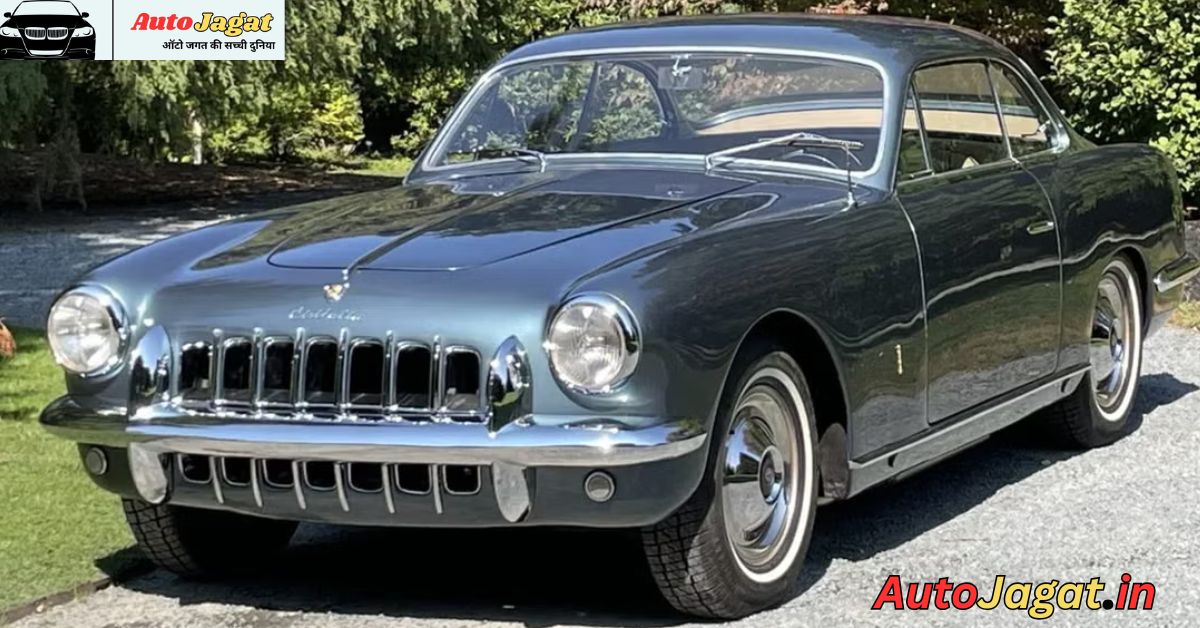
The car was designed by Giovanni Savonuzzi, a talented Italian engineer and stylist. Built in 1952, the 808XF was a convertible bodied by Vignale, one of Italy’s most prestigious coachbuilders. Its sleek lines, low stance, and elegant proportions were unmistakably European, yet under the hood lay Ford and Mercury mechanicals, including a V8 engine that promised American reliability and power.
Design and Engineering
The 808XF’s design was striking. With flowing curves, a long hood, and a short rear deck, it embodied the Italian grand touring aesthetic. The interior featured refined details, blending luxury with sportiness. Unlike Ford’s mainstream sedans of the era, the 808XF looked exotic, closer to a Ferrari or Maserati than anything rolling out of Dearborn.
Mechanically, the car relied on Ford’s proven components. This was intentional: the idea was to combine Italian artistry with American practicality, ensuring that spare parts and servicing would be easy for U.S. customers. In theory, this would give Ford a stylish sports car without the headaches of maintaining a purely European machine.
The Business Vision
Henry Ford II personally oversaw the project, hoping to bring European glamour into Ford showrooms years before the De Tomaso Pantera or even the Thunderbird appeared. The plan was ambitious: Ford dealerships would sell a car that looked like a Ferrari but carried the dependability of a Ford.
Unfortunately, the dream collided with reality. The cost of building the 808XF was simply too high. Importing Italian coachwork, integrating it with American mechanicals, and ensuring quality at scale proved financially unfeasible. Ford executives, wary of the expense, pulled the plug. The prototype remained a one-off, a tantalizing glimpse of what could have been.
Legacy and Significance
Though the Cisitalia 808XF never reached production, its significance is undeniable. It represents one of the earliest attempts by Ford to enter the sports car market, predating the Thunderbird by three years. Had it succeeded, Ford might have established itself as a sports car manufacturer long before the Mustang era.
For Cisitalia, the project highlighted the company’s ambition but also its financial struggles. Dusio’s ventures, including investments in Porsche-designed vehicles, stretched the company thin. By the mid-1950s, Cisitalia faced mounting challenges, eventually fading from prominence.
Today, the 808XF is remembered as a beautiful failure—a car that combined the best of two worlds but was undone by economics. It occasionally surfaces at auctions and classic car shows, where enthusiasts marvel at its rarity and elegance.
Why It Matters
The story of the Cisitalia 808XF is more than just a footnote in automotive history. It illustrates the tension between design ambition and business reality. It shows how collaborations across borders can produce stunning results, even if they don’t always succeed commercially. And it reminds us that the cars we see on the road are often the survivors of countless prototypes, experiments, and dreams that never made it past the boardroom.
In many ways, the 808XF foreshadowed later collaborations between American and European manufacturers, such as the Ford-powered De Tomaso Pantera in the 1970s. It proved that the idea of blending American muscle with Italian style was compelling—just ahead of its time.
Conclusion
The Cisitalia 808XF remains a fascinating “what if” in Ford’s history. Sleek, stylish, and ambitious, it could have been Ford’s first true sports car, reshaping the company’s image years before the Mustang galloped onto the scene. Instead, it lives on as a rare prototype, a reminder that even in the world of automobiles, dreams sometimes stall before reaching the open road.

Hello, my name is Himanshu Kumar and I am an experienced Digital Marketer. I have been blogging for the last 4 years and I have special interest in SEO. Here I give you easy bikes and writes easy-to-understand reviews and news about the latest bikes, helping readers choose the best options.. My aim is to always provide you with accurate, new and useful information.