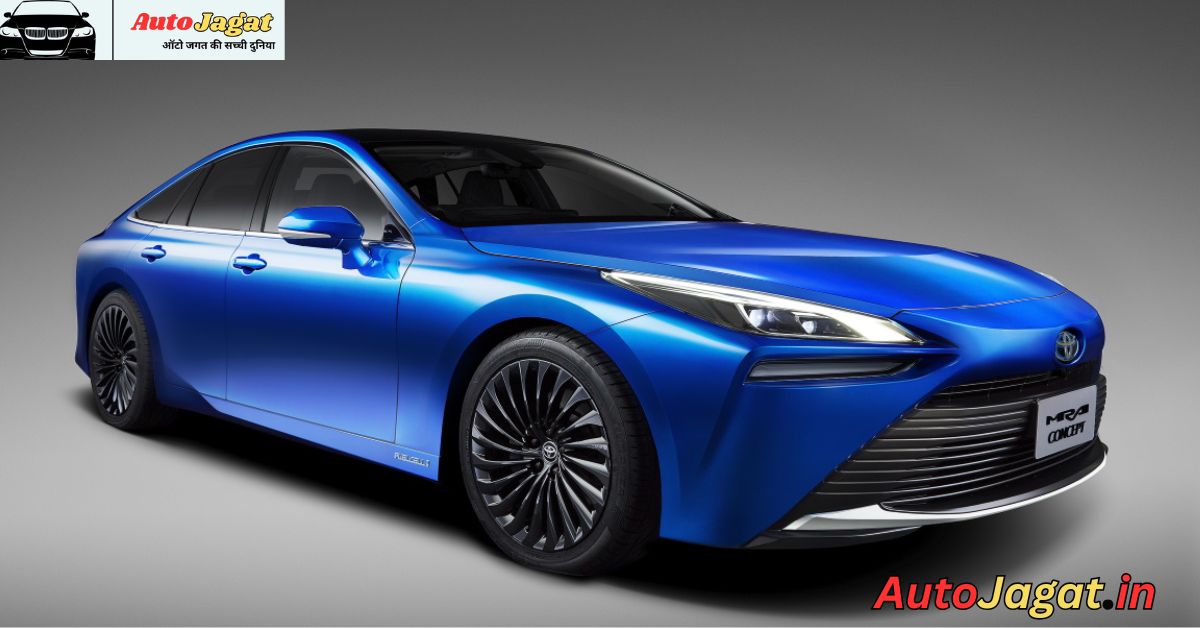
The global automotive industry is undergoing a seismic shift toward sustainable mobility, and Toyota is at the forefront with its Mirai, a hydrogen fuel-cell electric vehicle (FCEV). Expected to launch in India in 2025, the Mirai represents a bold step toward clean energy adoption, offering zero tailpipe emissions without compromising performance or driving range.
What Is the Toyota Mirai?
The Toyota Mirai is a five-seater luxury sedan powered by hydrogen fuel cells. Unlike conventional EVs that rely on lithium-ion batteries, the Mirai uses hydrogen stored in high-pressure tanks to generate electricity through a chemical reaction. The only by-product?
- Engine: 3698cc hydrogen fuel-cell system
- Power Output: 152 bhp
- Torque: 335 Nm
- Transmission: Manual
- Fuel Type: Hydrogen
This makes the Mirai one of the cleanest vehicles available, combining eco-friendliness with Toyota’s reputation for reliability.
Performance and Range
One of the biggest advantages of hydrogen FCEVs like the Mirai is their quick refueling time. Unlike battery EVs that can take hours to charge, the Mirai can be refueled in just 5 minutes, offering a driving range comparable to petrol or diesel cars.
- Acceleration: Smooth and linear thanks to instant torque delivery.
- Range: Comparable to premium EVs, estimated at over 600 km per tank.
- Driving Experience: Silent, refined, and vibration-free, making it ideal for urban and highway driving.
Design and Comfort
Toyota has ensured that the Mirai is not just about sustainability but also about luxury and comfort.
- Exterior: Sleek, futuristic design with aerodynamic lines.
- Interior: Premium cabin with advanced infotainment, plush seating, and ample legroom.
- Safety: Equipped with Toyota Safety Sense, including adaptive cruise control, lane-keeping assist, and collision avoidance systems.
Why Hydrogen Matters for India
India is aggressively pursuing clean mobility solutions, with EV adoption growing rapidly. However, challenges like charging infrastructure and battery recycling remain. Hydrogen FCEVs like the Mirai offer an alternative pathway:
- Quick Refueling: Comparable to petrol/diesel vehicles.
- Long Range: Ideal for intercity travel.
- Zero Emissions: Only water vapor is released.
- Energy Security: Hydrogen can be produced domestically from renewable sources.
The Indian government has already announced the National Hydrogen Mission, aiming to make India a global hub for green hydrogen production. The Mirai’s arrival aligns perfectly with this vision.
Market Positioning
With an expected price of ₹60 lakh, the Mirai will compete in the premium EV and luxury sedan segment. While it may not be mass-market initially, it will serve as a technology demonstrator, paving the way for broader hydrogen adoption.
Comparison Snapshot
| Car | Fuel Type | Power | Range | Price (approx) |
|---|---|---|---|---|
| Toyota Mirai | Hydrogen FCEV | 152 bhp | ~600 km | ₹60 lakh |
| Tesla Model 3 | Battery EV | 283 bhp | ~500 km | ₹70 lakh |
| BMW i4 | Battery EV | 335 bhp | ~590 km | ₹72 lakh |
| Mercedes EQC | Battery EV | 402 bhp | ~450 km | ₹75 lakh |
Challenges Ahead
While the Mirai is groundbreaking, hydrogen adoption in India faces hurdles:
- Infrastructure: Hydrogen refueling stations are scarce.
- Cost: Initial pricing is high compared to EVs.
- Awareness: Consumers need education about hydrogen safety and benefits.
However, with government support and industry collaboration, these challenges can be overcome.
Final Thoughts
The Toyota Mirai is more than just a car—it’s a vision of India’s clean mobility future. By introducing hydrogen fuel-cell technology, Toyota is offering a sustainable alternative that addresses EV limitations while delivering luxury and performance.
For early adopters, the Mirai represents exclusivity, innovation, and eco-consciousness. For India, it’s a step toward achieving its green hydrogen ambitions.
As the automotive landscape evolves, the Mirai could very well be remembered as the car that brought hydrogen mobility to Indian roads.

Hello, my name is Himanshu Kumar and I am an experienced Digital Marketer. I have been blogging for the last 4 years and I have special interest in SEO. Here I give you easy bikes and writes easy-to-understand reviews and news about the latest bikes, helping readers choose the best options.. My aim is to always provide you with accurate, new and useful information.