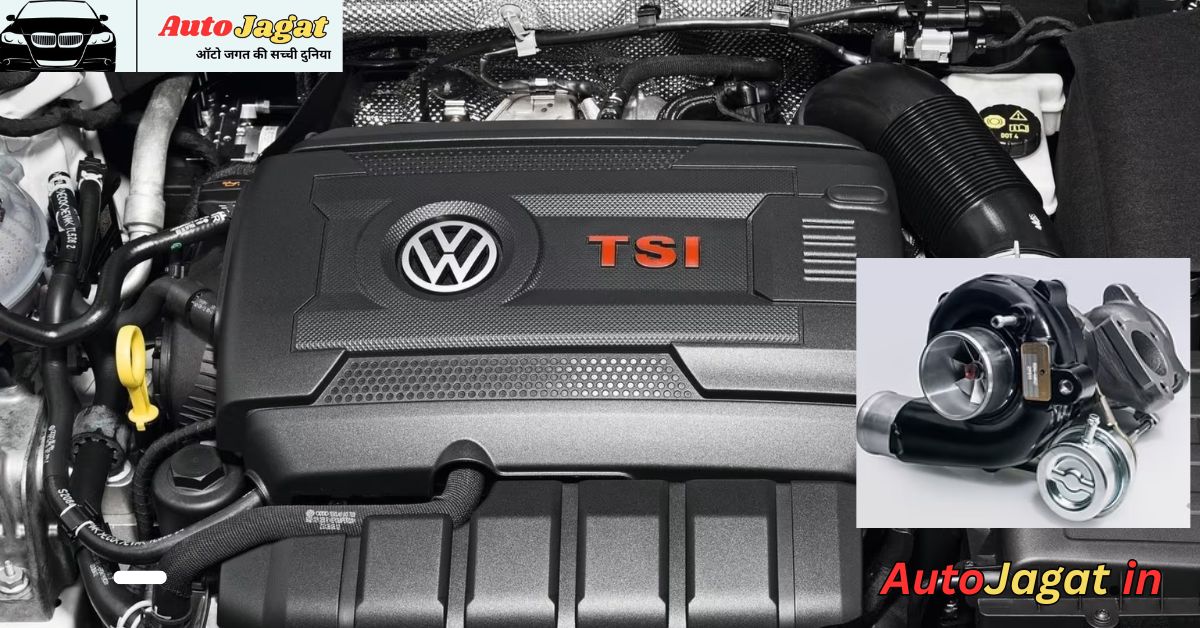
Turbochargers have become the beating heart of modern performance and efficiency, and few brands embody this better than Volkswagen (VW) and Audi. Over the past two decades, both companies have refined turbocharging technology to meet stricter emissions standards while delivering exhilarating driving experiences. In 2025, their latest innovations—particularly the EA888 Evo 5 engine family and Audi’s variable vane turbo geometry—showcase how turbochargers are evolving to balance sustainability with performance.
🌟 The EA888 Evo 5: VW’s Turbocharged Workhorse
Volkswagen’s EA888 engine series, first introduced in 2006, has become one of the most widely used turbocharged inline-four engines across VW Group vehicles. The latest Evo 5 generation represents a leap forward in packaging, efficiency, and adaptability.
Key highlights:
- Compact packaging: Ancillaries are tightly integrated around the block, allowing installation across multiple platforms.
- Improved emissions compliance: Designed to meet evolving global standards while maintaining performance.
- Versatility: Powers everything from VW’s mainstream sedans to Audi’s premium models.
This engine family underpins VW’s Premium Platform Combustion (PPC), which supports the last generation of internal combustion vehicles before full electrification.
⚡ Audi’s Variable Vane Turbo Geometry
Audi has taken turbocharging a step further with variable vane geometry (VVG), a technology that optimizes airflow through the turbocharger. By adjusting vane angles, the system improves responsiveness at low RPMs while maintaining high-end power.
Benefits of Audi’s VVG system:
- Enhanced low-end torque, making cars like the A5 and Q5 more fun to drive.
- Reduced turbo lag, ensuring smoother acceleration.
- Better fuel efficiency, as the turbo adapts to driving conditions.
This innovation reflects Audi’s focus on combining performance with everyday usability, ensuring that turbocharged engines remain relevant even as electrification expands.
🏎️ Performance Meets Sustainability
VW and Audi’s turbocharger strategies highlight a broader industry trend: downsizing engines while maintaining output. Instead of large-displacement engines, smaller turbocharged units deliver comparable power with lower emissions.
Examples include:
- VW’s 2.0-liter turbocharged inline-four in mainstream models.
- Audi’s turbocharged V6 in performance-oriented sedans and SUVs.
By leveraging turbocharging, both brands achieve higher efficiency without sacrificing driving excitement.
📊 Comparison: VW EA888 Evo 5 vs Audi VVG Turbo
| Feature | VW EA888 Evo 5 | Audi Variable Vane Turbo Geometry |
|---|---|---|
| Engine Type | Turbocharged inline-four | Turbocharged inline-four / V6 |
| Focus | Packaging, emissions compliance | Low-end torque, reduced turbo lag |
| Applications | VW sedans, Audi entry models | Audi A5, Q5, S5, SQ5 |
| Innovation | Compact ancillary integration | Adjustable vane angles |
| Benefit | Versatility, efficiency | Performance, responsiveness |
🌍 Market Positioning
Turbocharging remains central to VW and Audi’s transition strategy. While electric vehicles dominate headlines, turbocharged ICEs continue to power millions of cars worldwide. For buyers in markets like India, Europe, and North America, turbocharged engines offer a bridge technology—delivering efficiency today while EV infrastructure matures.
🚀 Challenges and Opportunities
Challenges:
- Meeting stricter emissions standards without compromising performance.
- Balancing ICE development with EV investments.
- Educating consumers about the benefits of advanced turbo systems.
Opportunities:
- Turbocharging allows VW and Audi to extend the life of ICE platforms.
- Variable vane geometry sets Audi apart in performance-oriented segments.
- EA888 Evo 5 ensures VW remains competitive in mainstream markets.
✨ Final Thoughts
The story of VW and Audi turbochargers is one of evolution and adaptation. From the versatile EA888 Evo 5 to Audi’s variable vane geometry, these technologies prove that turbocharging is far from obsolete. Instead, it remains a vital tool in balancing performance, efficiency, and sustainability.
As electrification accelerates, turbocharged engines may represent the last great chapter of ICE innovation—a chapter where VW and Audi continue to lead with engineering excellence.

Hello, my name is Himanshu Kumar and I am an experienced Digital Marketer. I have been blogging for the last 4 years and I have special interest in SEO. Here I give you easy bikes and writes easy-to-understand reviews and news about the latest bikes, helping readers choose the best options.. My aim is to always provide you with accurate, new and useful information.