For years, Hyundai has been the master of the “lifestyle” SUV—vehicles that look great at the trailhead but prefer the safety of a paved parking lot. That era officially ended at the 2026 New York International Auto Show. With the surprise global premiere of the Hyundai Boulder Concept, the South Korean giant didn’t just dip its toe into the dirt; it dove headfirst into a rock-crawling, mud-slinging canyon.
The Boulder is more than a design study; it is a manifesto. It represents Hyundai’s first serious foray into body-on-frame architecture, signaling a future where the brand competes directly with the likes of the Jeep Wrangler, Ford Bronco, and Land Rover Defender.
“Art of Steel”: A New Design Language
Developed by the team at Hyundai Design North America, the Boulder introduces a philosophy called “Art of Steel.” While many modern SUVs try to hide their structural toughness behind plastic cladding, the Boulder celebrates it.
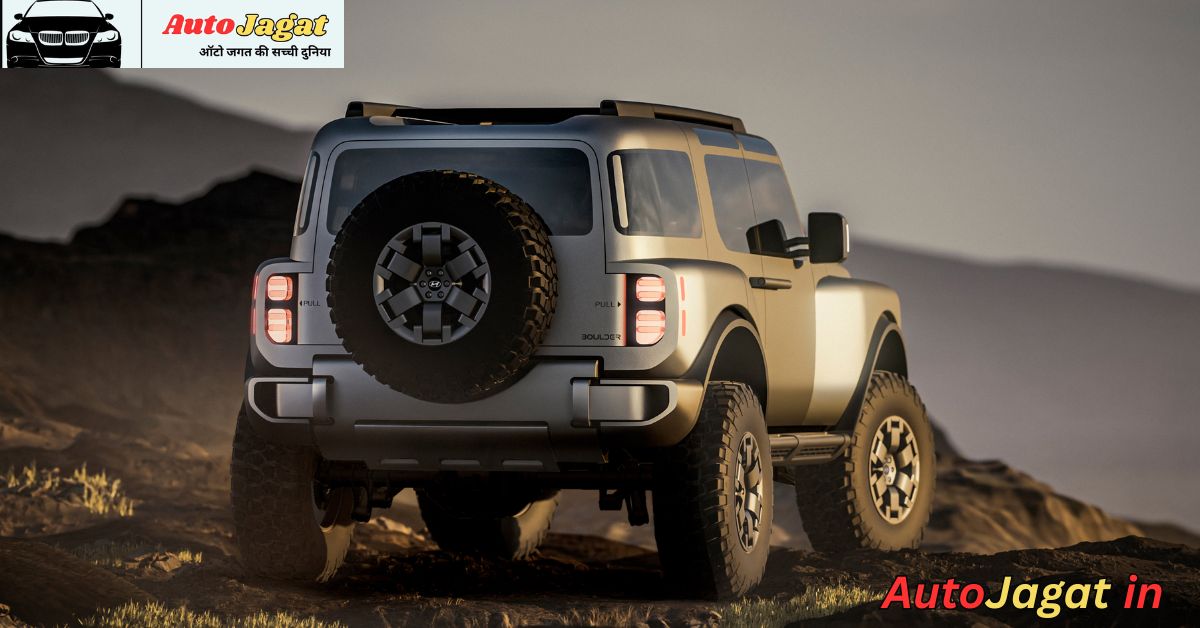
The exterior is finished in a mesmerizing Liquid Titanium, a paint that looks like molten metal frozen in time. The silhouette is unapologetically boxy and upright, maximizing interior volume and visibility. But the real magic is in the details:
- Coach-Style Doors: The center-opening doors reveal a pillarless entry, making it incredibly easy to load gear or scramble into the cabin.
- Dual Safari Windows: Fixed upper windows flood the cabin with light, ensuring that passengers don’t miss a single mountain peak or desert vista.
- The “Swiss Army” Tailgate: A double-hinged rear gate that can open from either side, paired with a power drop-down rear window for carrying extra-long objects like surfboards or timber.
Built for the “LFG” Crowd
Hyundai isn’t playing around with the Boulder’s off-road credentials. It sits on massive 37-inch mud-terrain tires wrapped around 18-inch wheels. With short overhangs and an aggressive “breakover” angle, it’s designed to traverse terrain that would leave a standard crossover high and dry.
Inside, the cabin is a mix of high-tech “digital spotter” software and old-school tactile satisfaction.
- Physical Controls: In a world of touchscreens, Hyundai kept chunky physical knobs and grab bars. This ensures you can actually adjust the climate or diff-locks while wearing gloves or bouncing over a washboard road.
- Real-Time Guidance: A software-driven off-road guidance system acts as a virtual spotter, using external cameras and sensors to help the driver navigate technical obstacles.
- Modular Utility: Fold-out tray tables and steel webbing on the roof rack transform the vehicle into a mobile basecamp for “work-from-anywhere” digital nomads.
The Billion-Dollar Subtext: A Midsize Pickup is Coming
While the Boulder is currently an SUV concept, the industry is buzzing about what it represents under the skin. Hyundai confirmed that this fully-boxed ladder-frame platform is the blueprint for a production midsize pickup truck arriving by 2030.
This is a massive strategic pivot. By moving away from the unibody construction of the Santa Cruz and toward a traditional truck frame, Hyundai is preparing to fight for the “heart of America”—the lucrative segment currently dominated by the Toyota Tacoma and Chevy Colorado.
“Body-on-frame vehicles are the backbone of American work and adventure,” said José Muñoz, President and CEO of Hyundai Motor Company. “We intend to compete in this segment with everything we have.”
2027 and Beyond: What to Expect
While the “Boulder” nameplate might remain a concept title, the technology and design language will bleed into 36 new models Hyundai plans to launch in North America by the end of the decade.
Industry insiders expect a production version of a rugged SUV (a “Junior Boulder,” if you will) could arrive as early as 2027, potentially offering both traditional internal combustion and high-torque electric powertrains.

Hello, my name is Himanshu Kumar and I am an experienced Digital Marketer. I have been blogging for the last 4 years and I have special interest in SEO. Here I give you easy bikes and writes easy-to-understand reviews and news about the latest bikes, helping readers choose the best options.. My aim is to always provide you with accurate, new and useful information.