The automotive world has long been accustomed to “Musk time”—a unique chronological dimension where product launches shift like desert sands. But as the long-awaited public demonstration of the next-generation Tesla Roadster approaches, the conversation is shifting from timeline fatigue to pure physics.
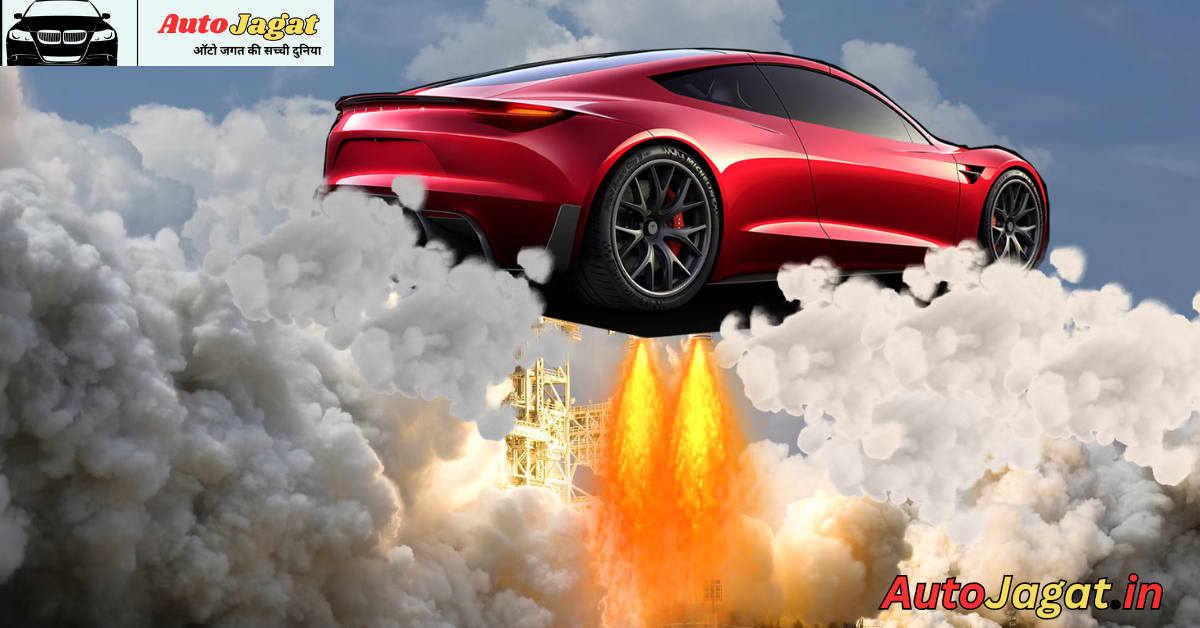
Tesla is deep at work on project “A71” at Giga Texas, preparing a vehicle that doesn’t just push the boundaries of electric performance, but completely breaks them. The centerpiece of this halo car? An optional, aerospace-derived SpaceX Package featuring actual cold-gas rocket thrusters.
It sounds like science fiction, but the engineering behind it is startlingly real. Here is everything you need to know about Tesla’s rocket-propelled hypercar.
The Physics of a Sub-1-Second Car
When Tesla first stunned the world with the Roadster prototype, it boasted a 0–60 mph time of 1.9 seconds—a figure that was once considered the absolute physical limit for a road-legal car using rubber tires.
Tires rely on friction. There is a mechanical threshold where rubber simply loses traction against tarmac, spinning uselessly no matter how much electric torque you feed it. To bypass this law of physics, you need an external force. Enter cold-gas thrusters.
By utilizing approximately 10 rocket thrusters seamlessly integrated behind the bodywork and license plate, the Roadster introduces pure, directional thrust. Elon Musk has doubled down on an almost unbelievable benchmark: a 0–60 mph sprint in under 1 second.
Achieving this means the driver will experience over 2.5 Gs of force. To put that in perspective, that is roughly equivalent to the physical toll experienced by astronauts during a space shuttle launch.
How Does the SpaceX Package Work?
Unlike Falcon 9 rockets, the Roadster won’t be shooting pillars of fire out of its rear bumper. The system relies entirely on compressed air, making it safe for the street (mostly) and clean.
- The Powerhouse: An ultra-high-pressure electric pump draws in ambient air and compresses it into massive storage tanks.
- The Tanks: The car utilizes Composite Overwrapped Pressure Vessels (COPV)—the exact same high-tech tanks SpaceX uses in its rockets to hold fuel under pressure. These tanks are so large they actually replace the Roadster’s rear seats.
- The Release: The air is pressurized to a staggering 10,000 psi. When you stomp the accelerator, computer-controlled thruster nozzles blast this compressed air outward, generating a massive cold jet of thrust.
It’s Not Just About Straight-Line Speed
While a sub-1-second launch gets the headlines, the true genius of the SpaceX package lies in its multidirectional utility. The thrusters aren’t just pointed backward.
1. The “Invisible Spoiler” (Downforce)
High-capacity battery packs make EVs heavy, which can hurt handling. By pointing thrusters upward, the Roadster can blast compressed air skyward, instantly creating thousands of pounds of artificial downforce. This “glues” the car to the road during high-speed cornering without the need for massive, drag-inducing wings.
2. Active Braking
In an emergency stopping situation, the front-facing thrusters can fire instantly. By using air resistance as a negative decelerator, the Roadster can drastically reduce its braking distance, stopping faster than conventional disc brakes and tires ever could.
3. The Hover Myth
Musk has famously teased that the car might be able to “fly a little bit” or hover. While internal engineering teams note that a brief, controlled lift-off is mathematically possible with this much pressure, the reality will likely be a heavily regulated, geofenced “Track Mode” to prevent drivers from accidentally clearing city traffic.
The Specifications: A Snapshot
While the rocket package is the star of the show, the underlying architecture of the base Roadster remains a masterclass in EV engineering.
| Metric | Spec Target |
| Battery Capacity | 200 kWh (Advanced 4680 Cybercells) |
| Wheel Torque | 10,000 Nm |
| Top Speed | Over 250 mph (402 km/h) |
| Max Range | 620 miles (1,000 km) |
| Base Price | ~$200,000 ($250,000 for Founders Series) |
When Will It Hit the Road?
With Tesla filing recent patents for ground-effect technology, bespoke one-piece seats, and its signature steer-by-wire system, the engineering is undeniably concrete. Following the highly anticipated public demonstration, initial production is slated for late 2027, scaling up into 2028.
The Tesla Roadster is no longer just an electric sports car meant to displace gasoline supercars. With a literal rocket engine strapped to its chassis, it is an experimental playground for the absolute limits of human engineering. Whether it’s practical is entirely beside the point—it’s bound to be the wild ride of the century.

Hello, my name is Himanshu Kumar and I am an experienced Digital Marketer. I have been blogging for the last 4 years and I have special interest in SEO. Here I give you easy bikes and writes easy-to-understand reviews and news about the latest bikes, helping readers choose the best options.. My aim is to always provide you with accurate, new and useful information.